- How to Set Up Your Brand System Before Using AI (Step-by-Step)
How to Set Up Your Brand System Before Using AI (Step-by-Step)
Whether you're using Canva AI or something else, the output is only as good as what you've given it to work from. Most AI tools don't have access to your brand at all. Canva AI does, but it needs something to pull from.
Set up your brand system first, and Canva AI generates on-brand content automatically. Skip it, and you're getting the same generic output as every other tool on the market.
Here's how to set it up in three steps.
Step 1: Build your Brand Kit: The foundation of on-brand AI content
Brand guidelines buried in a PDF aren't a brand system. They exist, technically, but they don't travel with the work. And if your brand doesn't travel with the work, AI just means you get inconsistency faster and at higher volume.
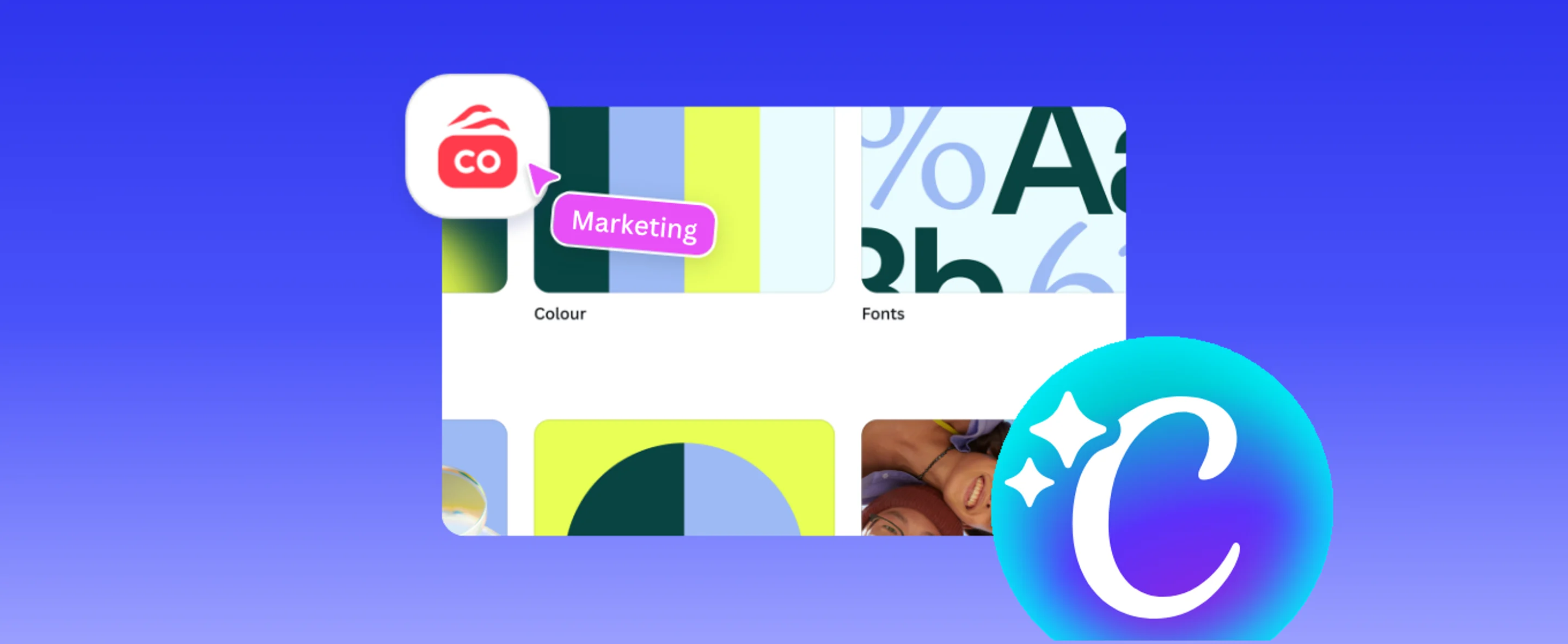
A Brand Kit changes this. It centralizes everything (logos, colors, fonts, tone of voice, approved assets) and connects it directly to every design your team makes. It's not a document someone has to find and follow. It's built into the starting point.
When your Brand Kit is set up properly(opens in a new tab or window), on-brand becomes the default. Not because people are trying harder. Because the right foundation is already there.
The test: Could a new team member produce something that looks and sounds exactly like your brand, without asking anyone for help? If not, your Brand Kit needs work.
Step 2: Apply brand governance with Brand Templates and Brand Controls
Here's the thing about brand governance: it doesn't work if it slows people down. When approval processes are painful, people route around them. When templates don't cover the formats teams actually need, people start from scratch. When guidelines aren't accessible in the moment of creation, they get ignored.
The goal isn't tighter controls. It's smarter ones.
Brand Templates(opens in a new tab or window) help teams stay consistent by giving everyone an on-brand starting point. Before a Brand Template is published, locks(opens in a new tab or window) are applied to the elements that can't move (logos, text styles, layout components), giving teams creative flexibility while protecting what matters most.
Brand Controls(opens in a new tab or window) then add another layer: restricting team members to approved colors and fonts, and requiring approval before anything is published. The brand is protected without the work flowing through a bottleneck.
The result: your team creates faster, not slower. On-brand becomes the path of least resistance, which is exactly where it needs to be.
This is also where the competitive gap becomes real. Standalone LLMs have no brand templates, no asset library, no persistent brand memory. Productivity suites with AI can set colors and fonts centrally, but there are no templates, no controls, no governed creative surface. Canva has all of it, built into the place where your teams are already creating.
Check out how to implement Canva for brand designers(opens in a new tab or window).
Step 3: Scale AI content production from your brand system
With your brand system in place, Canva AI doesn't start from scratch. It starts from your brand.
Once steps one and two are complete, this is where it compounds.
Generic AI generates from a prompt. On-brand AI(opens in a new tab or window) is generated from your Brand Kit and Brand Templates. That's not a subtle difference. It's the difference between content that needs a round of fixes before it can ship and content that's ready to refine and publish. At scale, that gap is everything.
With your brand system set up in Canva, every AI-generated output draws from the same source of truth as everything else your team creates. The colors are yours. The fonts are yours. The format fits. The brand travels with every design, every team, everywhere you work.
If you're creating content inside an LLM, you can create on-brand Canva designs directly inside Claude. → Here's how(opens in a new tab or window)
Set it up once. See the results.
The organizations that have done this are already seeing the results:
- 1.3 million on-brand designs created across 65+ countries
- Production 20x faster
- Approval time reduced by 95%.
Stripe, Keller Williams, Expedia Group: these aren't organizations that found a better AI tool. They built a brand system that made every tool better. Check out these apps and integrations(opens in a new tab or window) so you can connect your day-to-day workflows with Canva.
The three steps aren't complicated, and they don't have to take long. But they do have to happen before you scale AI access, not after. The teams that build their brand system first will use AI to execute on a foundation their competitors are still trying to build. The teams that skip it will use AI to produce inconsistency at speed.
The sooner it's in place, the sooner AI starts working for your brand instead of against it.
See how Canva Enterprise works end-to-end. Watch a demo(opens in a new tab or window)