- 5 Ways Real Estate Leaders Can Transform Their Marketing Strategy (and Save Millions)
5 Ways Real Estate Leaders Can Transform Their Marketing Strategy (and Save Millions)
In today's real estate market, visual content isn't just nice to have, it's essential. With the majority of buyers starting their property search online, the pressure on brokerages to deliver compelling, consistent marketing has never been greater. But here's the challenge: many real estate companies are losing thousands each month to invisible marketing costs while their agents struggle to create the professional content buyers expect.
The good news? Leading brokerages are solving both problems simultaneously by rethinking their approach to visual marketing. Here are five strategies real estate leaders can implement to eliminate waste, empower agents, and create a lasting competitive advantage.
1. Conduct a marketing audit to uncover hidden costs
Before you can optimize your marketing budget, you need to understand where the money is actually going. Most real estate companies focus on major expenditures like advertising campaigns while overlooking the "invisible spend" that quietly drains budgets.
Start by mapping out all marketing-related expenses across your organization:
- Stock imagery and graphics purchases across teams
- Multiple design tool subscriptions with overlapping features
- Outsourced design work for simple, repetitive tasks
- Redundant creative production when teams recreate existing materials
The Property Franchise Group (TPFG)(opens in a new tab or window), managing 1,900 locations globally, discovered that providing consistent in-house design coverage across its 700 offices would cost $16.8 million. That wasn't a line item in their budget; it was the cumulative cost of fragmented design needs they hadn't fully recognized.

Action step: Schedule a 30-day expense audit tracking every marketing-related purchase, subscription, and outsourced project across your brokerage. When luxury real estate company Engel & Völkers conducted a similar audit across their 900+ locations in 30+ countries, they discovered that addressing disconnected workflows and slow approval cycles could unlock significant value. You might be surprised by what you find.
“There were so many different ways that people were accessing and building marketing content, we didn’t have consistency,” says Jill DeSilva, SVP of Product at Engel & Völkers Americas.
2. Break down the design barrier for your agents
The average real estate agent now needs to produce marketing materials across multiple channels, including social media posts, email campaigns, print flyers, and yard signs. This, all while maintaining brand consistency and professional quality. This creates what many brokerages call a "marketing bottleneck," where agents spend valuable selling time wrestling with design tools instead of focusing on client relationships.
Traditional solutions, such as expensive design software or agency outsourcing, are time-consuming and often cost-prohibitive. The modern approach is to democratize design through intuitive platforms that empower agents to create professional materials in minutes, not hours.
First National Real Estate (FNRE)(opens in a new tab or window) experienced this pain point. Supporting 4,000 employees across offices in Australia, New Zealand, Vanuatu, and New Caledonia, they relied on a "clunky" template-based system that lacked customization and collaboration features.
"We uploaded 20 templates over three years," recalls Kim Batto, Marketing Manager at FNRE. "The old platform was frustrating."
After consolidating to a unified design platform, FNRE achieved a 500% increase in design templates and an 85% reduction in template turnaround time, saving over 156 hours per year on design production alone.

Action step: Evaluate whether your current tools actually empower agents or create additional friction. Can your newest agent create an on-brand property flyer in under 10 minutes? If not, it's time to rethink your approach.
3. Consolidate your marketing tech stack
Multiple software licenses, overlapping functionalities, and underused features. Sound familiar? Most brokerages have accumulated a patchwork of marketing tools over time, each solving a specific problem but creating inefficiency as a whole.
Ray White(opens in a new tab or window), one of Australia's largest real estate groups, recognized this issue and consolidated to a single platform where franchisees could create, collaborate, share, and publish without jumping between tools. This consolidation doesn't just save money on subscriptions; it eliminates the productivity cost of context-switching and reduces training time for new agents.

Action step: List every marketing tool your team uses and honestly assess overlap. Could three tools be replaced by one comprehensive solution? Calculate not just subscription costs, but the hidden cost of managing multiple platforms.
4. Invest in brand control systems, not brand control resources
Maintaining brand consistency across hundreds or thousands of agents traditionally required either strict approval processes (which slow everything down) or an army of design staff (which is prohibitively expensive). Neither approach scales well.
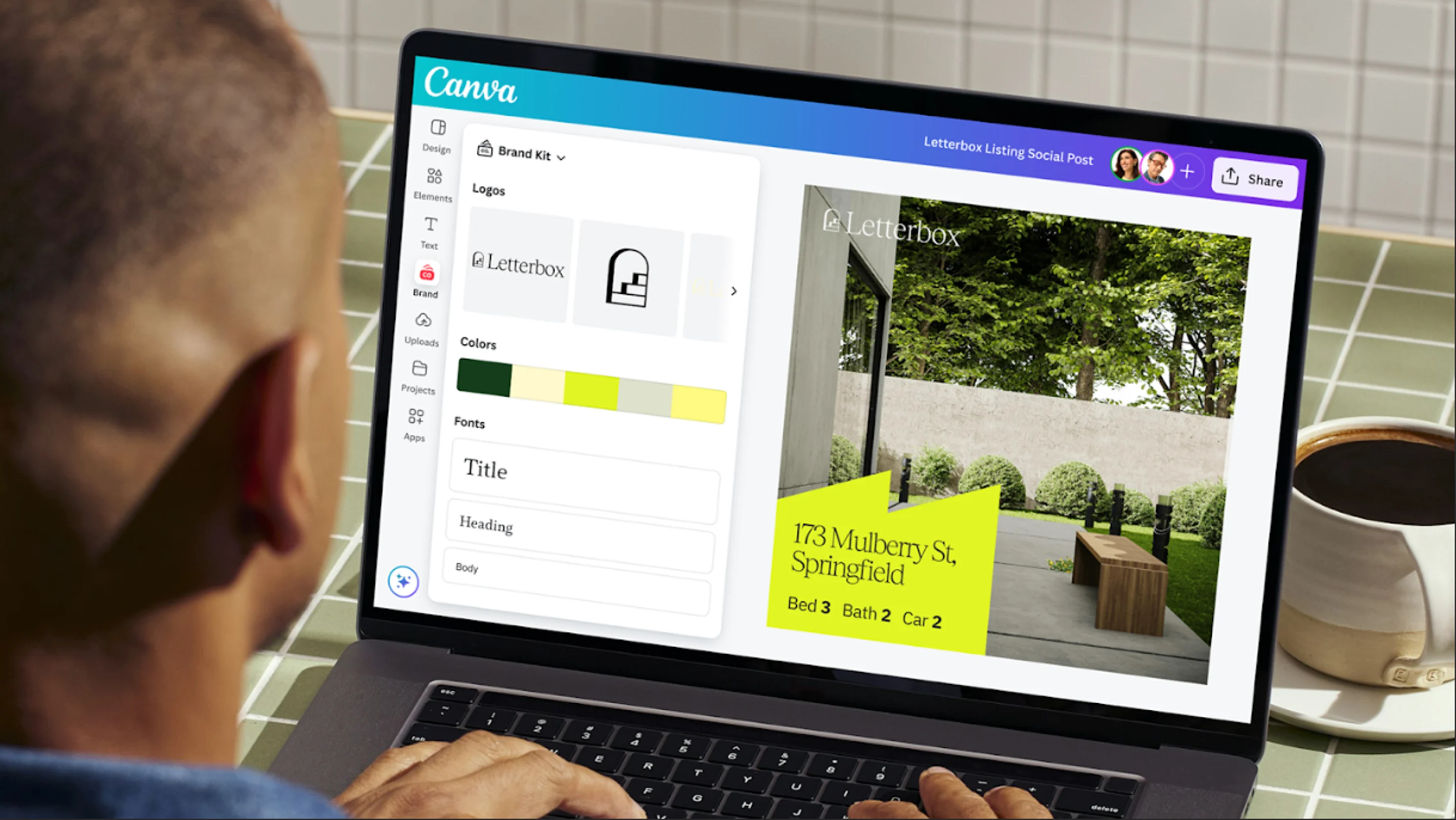
The smarter investment is in systems that build brand guidelines directly into the creation process. When Austin Hedley-Richards, Head of Digital Marketing at TPFG(opens in a new tab or window), needed to ensure brand consistency across their diverse portfolio, he didn't hire more designers, he implemented Brand Kits that made it impossible for agents to create off-brand materials.
"Our entire brand identity—fonts, colors, imagery, icons, logos, everything sits within Brand Kits," explains Austin. "Our design team creates templates once that instantly work for all 700 offices."
This approach freed up their creative team to focus on strategic projects that drive business growth rather than policing brand guidelines.
Action step: Shift your thinking from "How do we control what agents create?" to "How do we make it easy for agents to create only on-brand materials?" The latter scales infinitely better.
5. Measure efficiency gains, not just aesthetic improvements
Pretty marketing materials are great, but the real value of a modern visual marketing strategy lies in measurable business outcomes. Brokerages implementing comprehensive visual marketing strategies report up to 85% reduction in content creation time. That’s agents going from spending an hour on property marketing to just 10 minutes.
That efficiency gain translates into tangible business results:
- More time for client interaction and relationship building
- Faster time-to-market for new listings
- Increased agent productivity and satisfaction
- Enhanced perceived expertise and value in clients’ eyes
When PeakMade Real Estate(opens in a new tab or window) streamlined its visual creation process, agents reported saving hundreds of hours annually in design time while dramatically improving marketing quality. LJ Hooker saw similar results with improved client satisfaction as professional marketing materials enhanced their agents' perceived expertise.

Action step: Before implementing any new marketing solution, establish baseline metrics for time spent on content creation and quality of materials produced. Set specific targets for improvement and measure actual results after 90 days.
The competitive advantage hiding in plain sight
For real estate leaders, visual marketing represents both a challenge and an opportunity. The challenge is clear: maintaining brand consistency and marketing excellence across a distributed network of agents is hard. But the opportunity is even more compelling: brokerages that solve this problem create a significant competitive advantage in recruiting, retention, and market performance.
As Keller Williams recognized(opens in a new tab or window) when they implemented professional design tools across their network, empowering agents with world-class design capabilities isn't just about prettier marketing materials. It's about giving agents the tools to compete more effectively in an increasingly visual marketplace.

The real estate professionals who embrace this visual revolution today will thrive tomorrow, turning design from a bottleneck into their biggest competitive advantage. The question isn't whether to invest in design capabilities; it's how quickly you can implement systems that turn every agent into a marketing professional.
Ready to transform your brokerage's marketing strategy? Start with that marketing audit. The invisible costs you uncover might just fund your entire transformation.