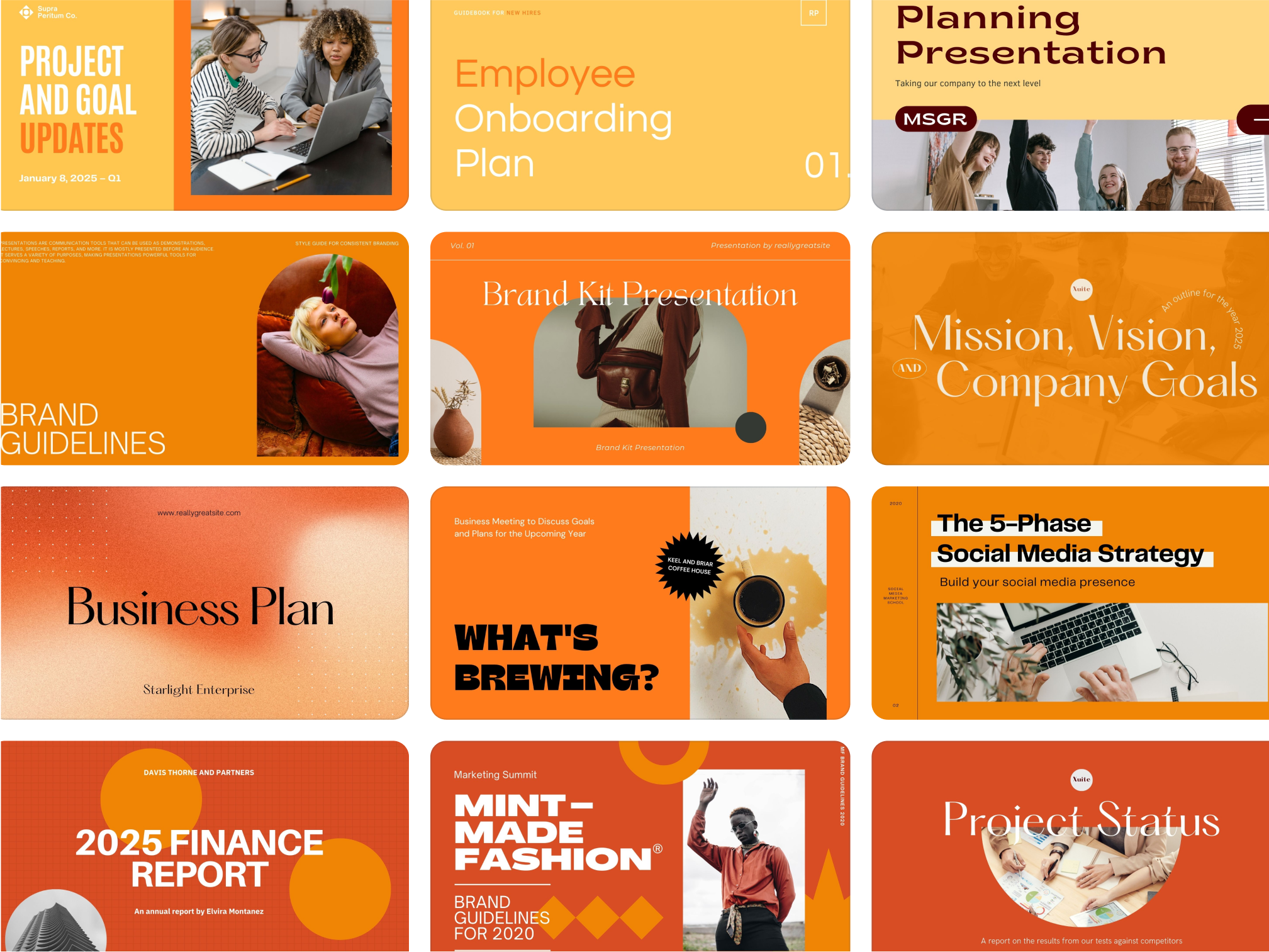
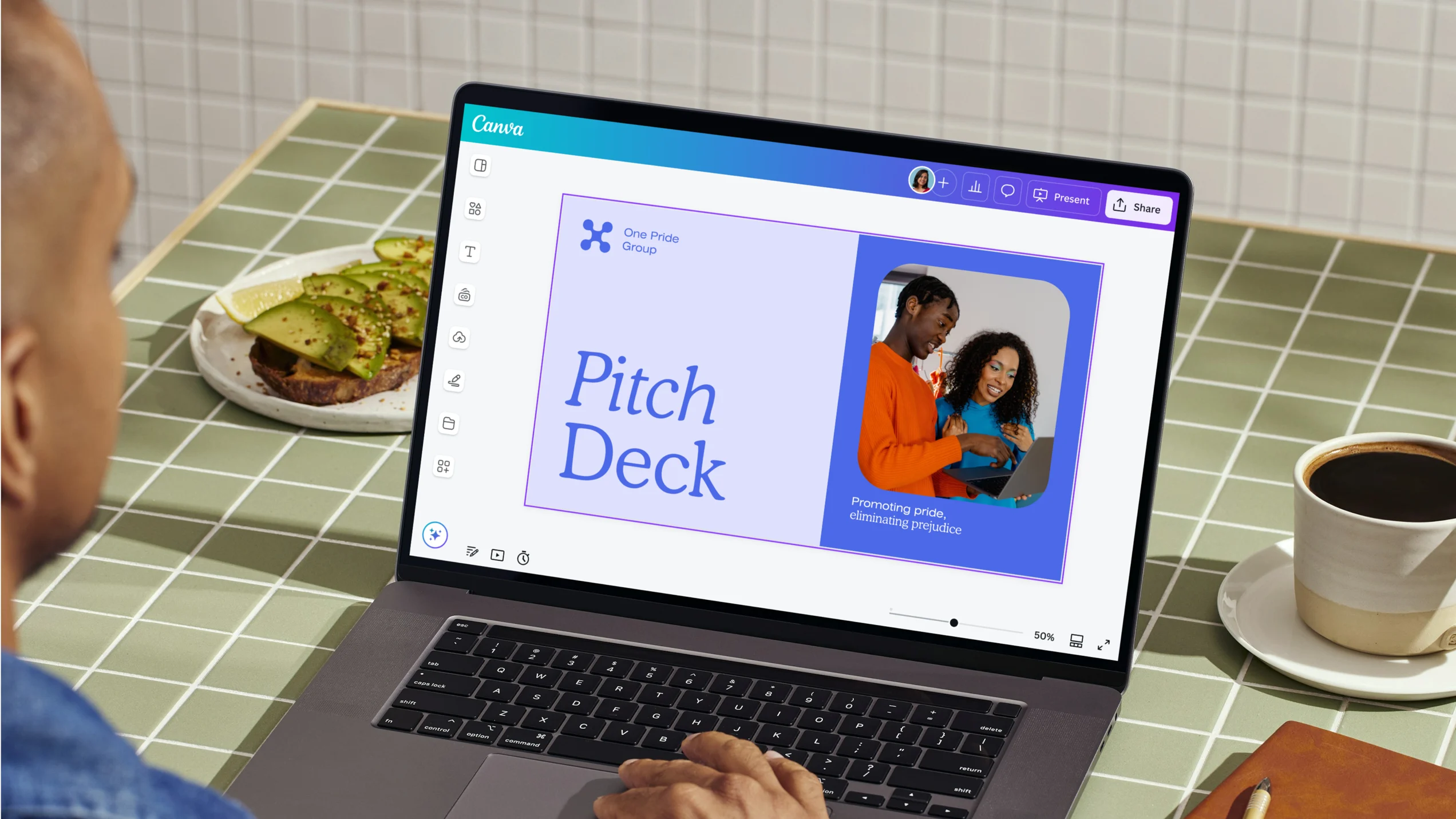
- Pitch Deck
Making a pitch deck: How-tos, templates, and tips

Jump to:
What is a pitch deck?
The art of pitching an idea is invaluable in a competitive business landscape. Both the seasoned entrepreneur and the startup owner rely on a well-crafted pitch deck to propel their businesses forward. But what exactly is a pitch deck, and how do you create one that gets a resounding "yes?"
A pitch deck is a presentation that condenses your business plan in a quick, digestible format. It’s a set of slides containing an overview of your products, services, business strategy, and financial projections. This helps potential investors understand your company’s core purpose, market potential, and vision. Your pitch deck gives them a glimpse of the incredible journey you're about to take.

What is the goal of a pitch deck?
The goal of a pitch deck is to persuade the audience to take a desired action. In most cases, you want the audience (that is, investors) to invest in your business, but you can also use a pitch deck to convince potential partners into a partnership agreement or persuade stakeholders to offer support in other ways.
Whatever your goal, your pitch deck should effectively convey your value proposition and highlight why it's worth their time and investment.
Business plan vs. pitch deck vs. elevator pitch
A pitch deck is often confused with a business plan or an elevator pitch. However, these three have different goals and speak to different audiences. Let's compare them:
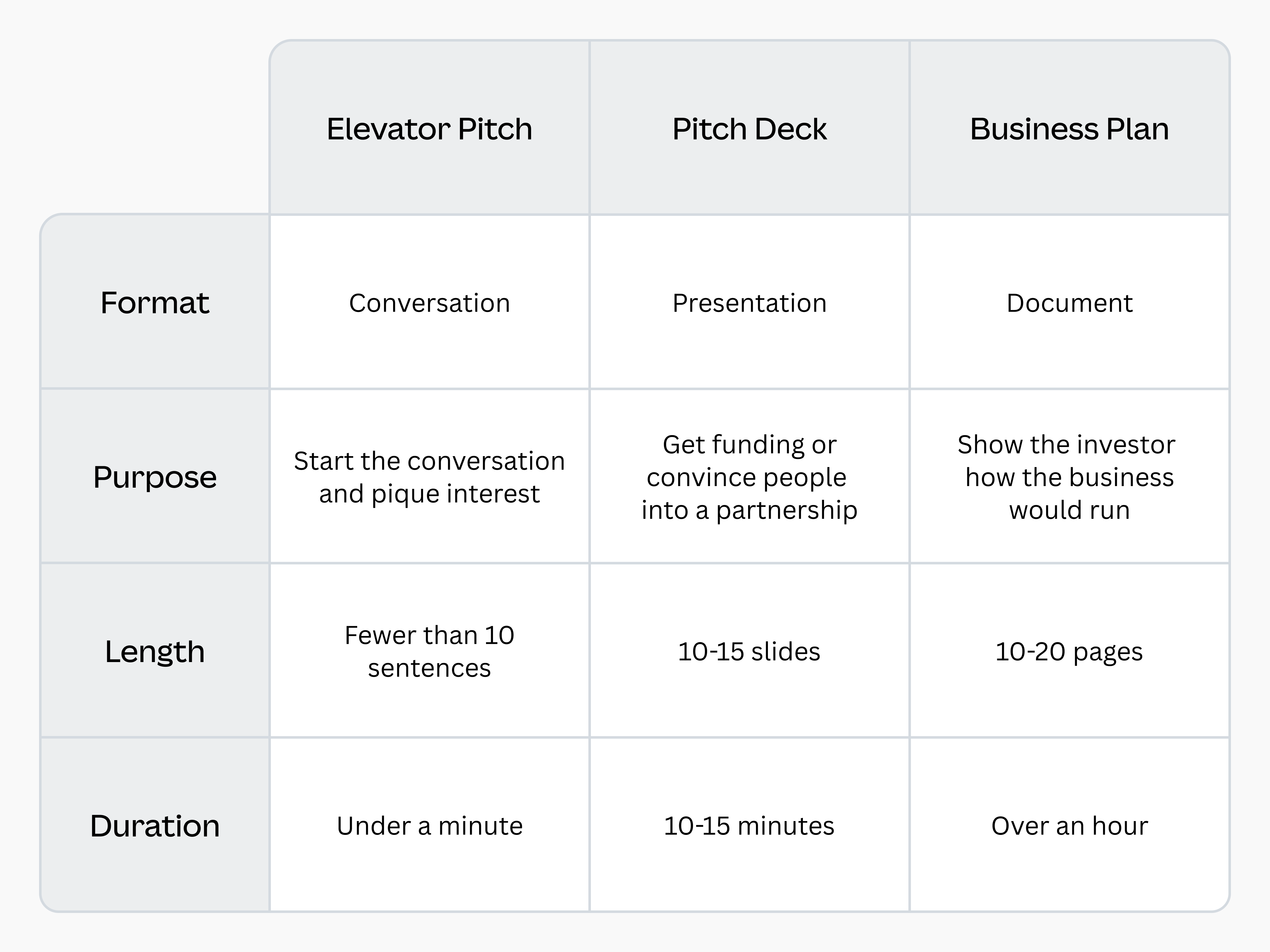
An elevator pitch, pitch deck, and business plan differ in format, purpose, length, and duration.
- Business plan: A business plan is a comprehensive document that outlines a company's objectives, strategies, market analysis, financial forecasts, and more. It’s intended for in-depth reviews, both internal (business management) and external (raising capital).
- Pitch deck: A pitch deck is a visual presentation that provides a quick overview of a business or an idea. The content is the same as the business plan, only much shorter. Ideally, pitch decks contain 10 slides, whereas business plans may contain dozens of pages. It's designed to capture an investor's attention and persuade them within a short period, typically during a meeting.
- Elevator pitch: An elevator pitch is a brief and persuasive speech that outlines the fundamental aspects of a business or idea in a very short time, like an elevator ride. It's meant to be delivered in a casual encounter with a potential stakeholder, aiming to pique their interest.
What is the purpose of a pitch deck?
The beauty of a professional pitch deck lies in its versatility. While most pitch decks aim to get investor funding, they can also be used for other goals, like partnerships and grants. Here’s a detailed look at the different purposes of a pitch deck:
Secure funding from investors
The most common use of a pitch deck is to secure funding from investors. Whether you're in the early stages of your startup or looking to scale, funding is essential. A pitch deck aimed at investors should clearly outline your business model, the problem you're solving, the solution you offer, and the potential for return on investment.
Investors look for compelling evidence that your business is viable and has significant growth potential. They want detailed financial projections, market analysis, and a clear strategy for achieving your goals.

To help you secure funding, a pitch deck should show the growth potential of your business.
Attract strategic partnerships
Strategic partnerships provide your business with additional resources, expertise, and market access. A pitch deck designed to attract partners should highlight the mutual benefits of collaboration. It showcases how your partnership can drive innovation and open new market opportunities. This kind of pitch deck should demonstrate the value proposition for potential partners to convince them to join forces with your business.
Secure grants
Many businesses, especially those in the research, technology, and social impact sectors, seek grants for funding. A pitch deck intended for this purpose should highlight the significance of your project, its social impact, and how it aligns with the benefactor's goals. To strengthen your application, this kind of pitch deck should show how you’ll use the funds to achieve specific outcomes. In addition, this pitch deck should showcase your track record of success in past projects.
Support a sales pitch
Sales teams use pitch decks to persuade leads to make a purchase. A sales pitch deck often supports a sales pitch, presenting your product or service in a structured and visually appealing manner and highlighting its benefits and unique selling points. By addressing a potential client’s pain points and demonstrating how you can solve their problems, your pitch deck can help you close more sales.
Different types of pitch decks
There's no one-size-fits-all pitch deck. Depending on your audience and goal, the content and structure of the pitch deck will vary. Here are the most common types of pitch decks, along with templates you can take inspiration from — or edit straight away.
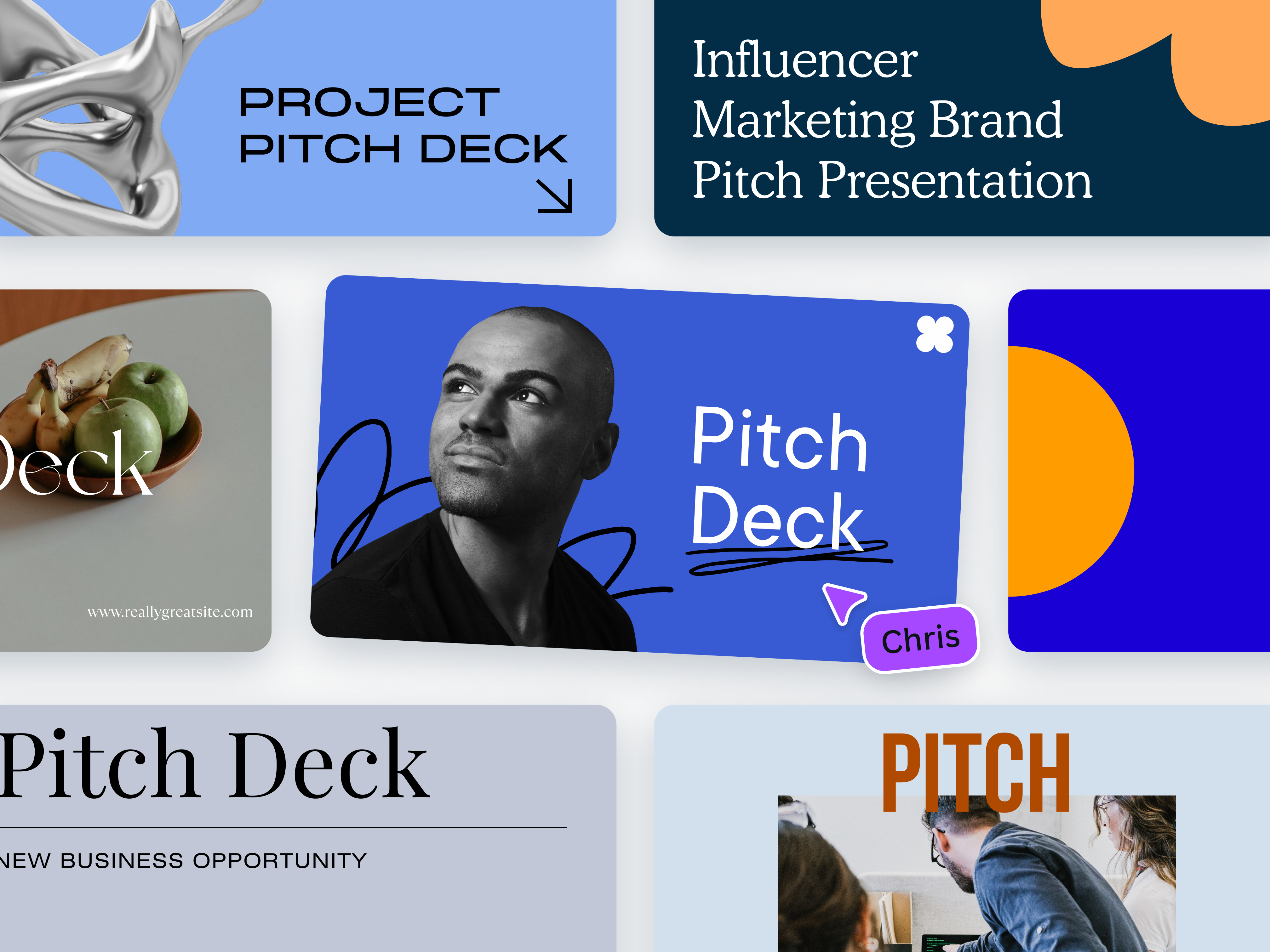
You can find customizable templates for different kinds of pitch decks on Canva.
An investor pitch deck is designed to attract potential investors. It contains information that will convince them to fund the idea. This includes market opportunity, the problem, your solution, the team, financial projections, and the funding requested.


As your business grows, it will need larger funding, and your pitch deck should evolve. A series A/B/C pitch deck is designed for companies seeking subsequent rounds of funding after their initial seed investment. Each series represents a different stage of growth and requires a pitch deck tailored to that stage.
- Series A pitch decks: These prove to investors that the business shows early traction and great potential for generating long-term profit.
- Series B pitch decks: These persuade investors to invest in scaling operations.
- Series C pitch decks: Often used by highly successful companies, these convince investors to invest in developing new products or expanding into new markets.
These types of pitch decks contain more detailed financial projections, traction metrics, and a clear plan for using the new funds to fuel even greater growth.

A sales pitch deck focuses on demonstrating the value of a product or service to potential customers. It includes details about the product or service, its key features and benefits, customer testimonials, pricing, and a compelling call to action. Your goal is to win over potential clients and customers.

A partnership pitch deck is aimed at potential partners or collaborators. It highlights the mutual benefits of the partnership, the complementary strengths of the two parties, and the potential for future growth and success through collaboration.

A pitch deck for grant proposals presents a compelling case for funding your project. It shows how the funding will be used and the impact it will have. It should convey the organization's mission, the specific project or initiative for which the funds are sought, and the expected outcomes.

What to include in a pitch deck?
The best pitch decks are more than just info on slides; they tell your story and persuade the audience to back your vision. An ineffective or incomplete pitch deck results in missed opportunities, leaving your business struggling to gain momentum. Here, we’ve rounded up a list of what investors want to see in a pitch deck.
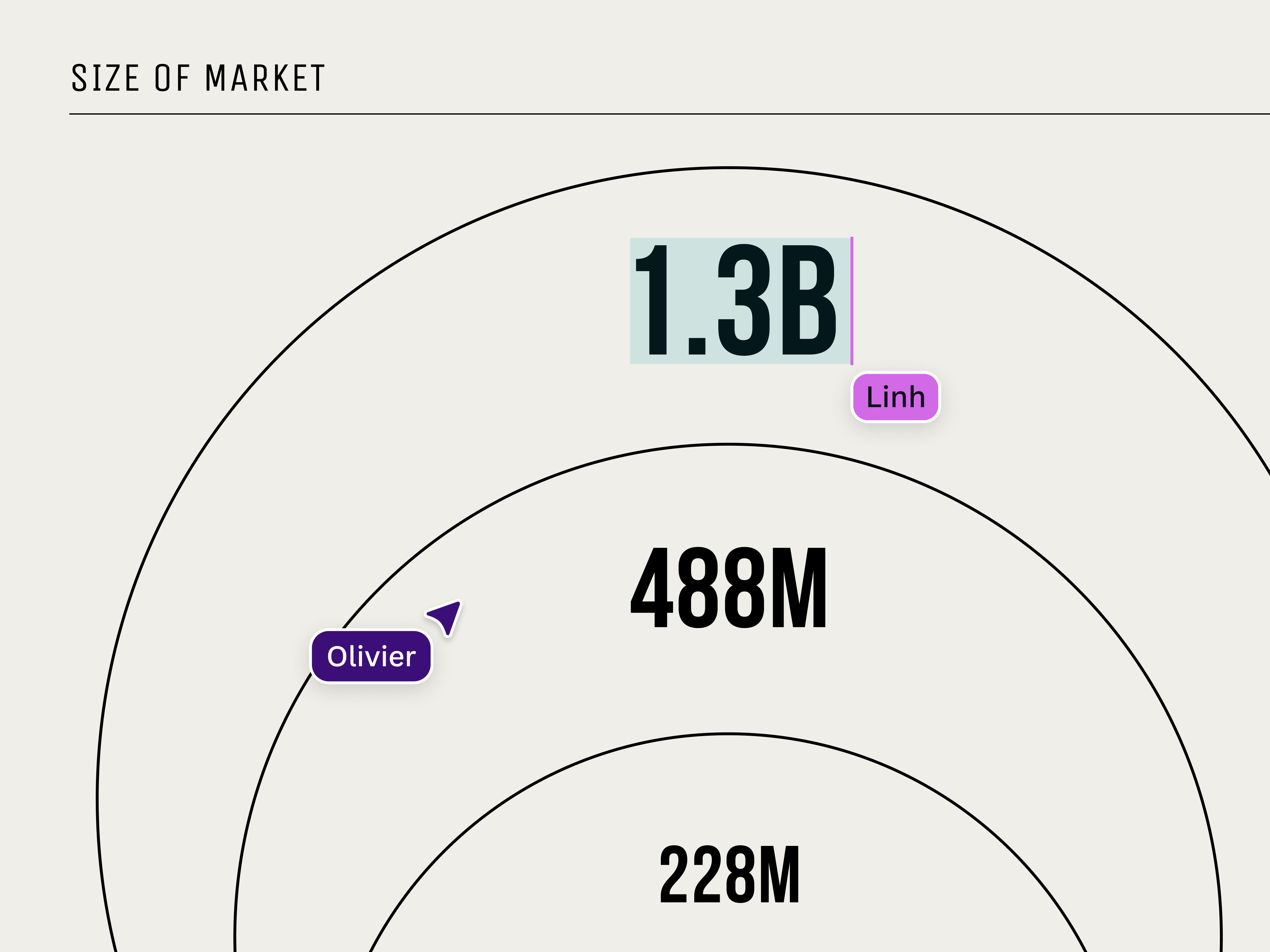
Ensure that the figures and information are presented in a cohesive set of slides.
The cover slide is your golden opportunity to make a lasting first impression. Serving as an introduction, a good cover slide contains your:
- Business profile: Your company logo and name should be prominent, along with a tagline that captures your essence.
- Short elevator pitch: Plus points if you add a punchy, attention-grabbing statement that conveys your value proposition.

This slide defines the problem and its impact. Is it something people deal with every day? Is this a considerable market gap? The problem could be stated this way: Over x million consumers face this problem, resulting in x amount of time wasted and x amount of money down the drain. Add relevant research that backs up your claim.
The solution slide introduces your product or service and explains how it alleviates the problem. This page highlights the features that make your solution unique, innovative, and better than alternative solutions.
These slides present evidence that your solution is taking off the ground with your target market. These include early wins like user growth, pilot program results, or positive press mentions. This part of the pitch quantifies your achievements with metrics that validate your potential. These include:
- Number of users
- Sales figures
- Website traffic
The product slide dives deeper into your product or service. It explains its key features and demonstrates how it meets the needs of the target market. The product slide contains screenshots or product mockups(opens in a new tab or window) to help investors visualize what you offer. When you create the product slide, connect it to the problem and the solution.
This slide explains the size of the market you're targeting. It provides data on the number of potential customers, overall industry revenue, etc. After all, investors want to know if there's enough "gold" out there to make your business worthwhile. This part of the pitch deck also defines your ideal customer: who are you trying to reach?
The business model slide in a pitch deck explains the engine that keeps your business running. In short, how you make money. The slide describes your revenue streams — do you sell products, offer subscriptions, or use a different strategy? Investors want to ensure your business model is sustainable and profitable.
No business exists in a vacuum. The competition slide in a pitch deck identifies your main competitors, their strengths, and weaknesses. The slide highlights your competitive advantage. What sets you apart from the rest? Why should investors choose your company over competitors? The competition slide can use tables or graphs to compare your business with your competitors.
Numbers talk! This part of the pitch deck provides realistic, data-driven financial projections, including revenue forecasts, expense estimates, and other key financial metrics. It gives investors a sense of your growth trajectory and financial health.
The marketing plan slide shows how you’ll reach your target audience and convince them to buy your product or service. This page discusses the strategies you'll use to generate awareness, attract customers, and drive sales. This could include:
- Social media strategy
- Content marketing plans
- Marketing initiatives
The marketing plan also mentions the key marketing channels and how they align with your target audience.
A business is only as strong as the team behind it. That’s why a pitch deck needs a team slide, which introduces your core team members and highlights their expertise and experience. Investors want to see a capable team with the skills and knowledge to take your business to the next level.
A good team slide has high-quality headshots and a brief bio for each team member, focusing on their relevant skills and accomplishments.
Now's the moment of truth. This slide clearly states the amount of funding you're seeking from investors. But don't just ask for money. Explain how you plan to use the funds and how it will help you achieve your goals.
The vision slide states your long-term vision for the business. Where will the funding take the company in 5 or 10 years?
A contact slide often concludes a pitch deck. This allows the audience to get in touch and continue the conversation about investment.
Pitch deck examples
Now that you know the building blocks for a killer pitch, let's take a peek at real-life pitch deck examples that have wowed investors and ignited success for these big brands. We also listed the lessons-to-be-learned from each pitch deck example.
Airbnb's original pitch deck was quite simple. Back then, it called itself "Air Bed & Breakfast" and focused on the core problem: expensive and impersonal hotel stays. The solution? Connecting travelers with locals who had spare space, offering a more affordable and unique experience. The deck used clear visuals and a compelling story to showcase the market potential of travelers booking rooms with locals, not hotels.

This Airbnb pitch deck convinced people that connecting with locals offers a more cost-effective and fulfilling travel experience.
The pitch deck: Airbnb pitch deck from 2008(opens in a new tab or window) from Ryan Gum
Key pitch deck ideas:
- Focus on the problem and solution: Clearly define the pain point and your idea for a better alternative. Check how Airbnb did it on slides 2 and 3 of its pitch deck.
- Keep it simple: Don't overload the audience with complex details. Focus on the core message and benefits. Airbnb used minimal text on each slide.
- Add testimonials: Airbnb supported its pitch with user testimonials from both travelers and hosts.
Uber's early pitch deck was all about convenience. It highlighted the frustration of hailing unreliable cabs and waiting forever. The solution? A smartphone app that connects riders with drivers instantly, offering a faster, more transparent way to get around. Here, Uber used data and visuals to present the market size and the potential disruption it could bring to the taxi industry.

This pitch deck demonstrated how Uber can disrupt the taxi industry and backed up its claims with figures.
The pitch deck: Uber pitch deck(opens in a new tab or window) as featured by Business Insider
Key pitch deck ideas:
- Highlight the market opportunity: Show investors the size of the problem you're addressing and the potential customer base. Check slides 17 and 18 to see how Uber did it.
- Focus on disruption: If your idea challenges the status quo, explain how it will revolutionize the market. See slide 6 on Uber’s pitch deck to see how they showcased Uber’s key differentiators.
- Data is your friend: Use statistics and market research to support your claims and showcase potential growth.
Facebook’s sales pitch deck showed companies how they can reach students and faculty through ads. This pitch deck positioned Facebook as an incredible platform for businesses to connect with thousands of users, tapping into a huge base of potential customers.
It emphasized the vast visibility and marketing opportunities available, highlighting Facebook's extensive reach and high engagement levels. The pitch deck demonstrated how businesses can leverage Facebook to enhance their marketing efforts. On the whole, it painted a compelling picture of the benefits companies can expect from advertising on Facebook.

With Facebook’s large user base, this pitch deck convinced businesses that Facebook is an excellent place to advertise.
The pitch deck: Facebook pitch deck(opens in a new tab or window) from Startuphome
Key pitch deck ideas:
- Understand your audience: Tap into a fundamental human need or desire. On slide 3, the pitch deck showed how Thefacebook.com took college campuses by storm because students wanted to connect.
- Vision is key: Clearly articulate your long-term goals and the impact your business will have. Check how Facebook did it in its Expansion Plan slide.
- Keep it visual: Use images and graphics to enhance your message and make your deck engaging.
On Tinder's original pitch deck, it was called "Matchbox" and focused on the awkwardness and difficulty of meeting new people in real life.
The solution? A mobile app that shows profiles of potential matches nearby. With a simple swipe right or left, users can connect with someone they're interested in. The pitch deck used playful visuals and focused on convenience to showcase how Tinder (then called Matchbox) could revolutionize the dating scene.

In this pitch deck, Tinder used an upbeat voice to show how it solves a problem that many people face when dating.
The pitch deck: Tinder pitch deck(opens in a new tab or window) from Ryan Gum
Key pitch deck ideas:
- Focus on a relatable problem: Identify a common pain point with which a large audience can connect. On slide 4, the pitch deck mentions how everyone has the same problem: fear of rejection.
- Keep it fun and lighthearted: Depending on your industry, a playful approach can be effective.
- Simplicity is key: Make your solution easy to understand and use.
How to create a pitch deck
With so many amazing business ideas out there, investors need a clear picture of why yours is the best investment. Here’s how you can make a pitch deck that highlights your business potential and shows that you have the drive to make it happen.

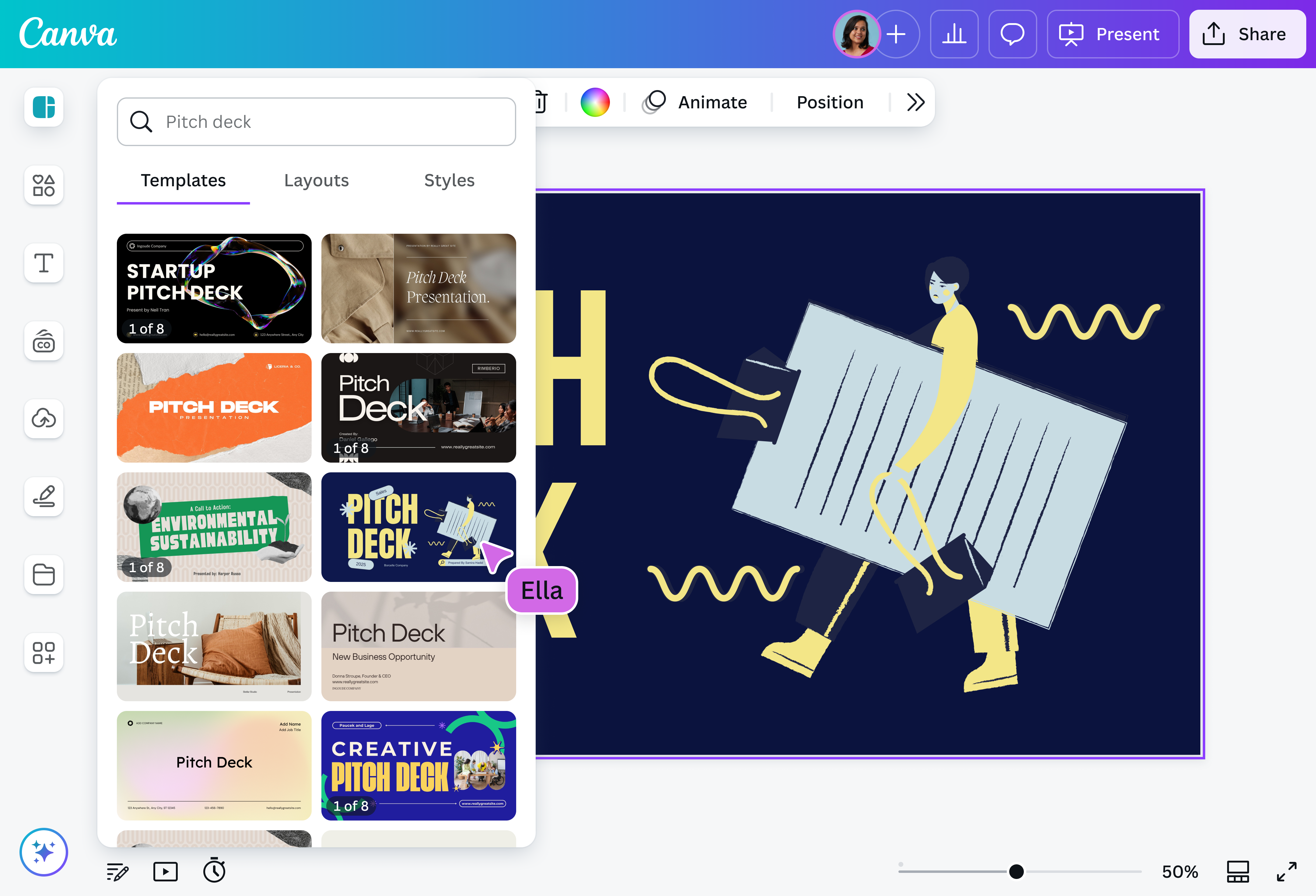
Take a deep dive into current trends, challenges, and opportunities in your industry. Research proves to the audience that you have a solid grasp of the market and sets the stage for your pitch.
As you conduct your research, keep your goal in mind. What do you hope to achieve with this pitch? Secure funding? Land a partnership? Your goal keeps your deck focused.
Back your claims with facts, figures, and market research. Cover key data points such as market size, business model, and traction (number of paying users, sales and revenue, website visits, pre-orders, etc.). See how this sample pitch deck slide showcases its data:

You can also research the background and investment preferences of your audience, then highlight the aspect of your business that resonates with them the most. For example:
- Real estate: Emphasize locations and market trends.
- Tech: Highlight innovation, scalability, and the technical expertise of your team.
- Creatives: Showcase your portfolio and client success stories.
Tailoring the content of your pitch deck can make a big difference in how your presentation is received.
People connect with stories. That’s why the best pitch decks are those that employ elements of storytelling. It makes your message memorable, simplifies complex ideas, encourages participation, and differentiates your pitch. Here’s how you can achieve that:
- Use simple language: Avoid jargon to make your content accessible.
- Don’t drag the introduction: Go to the action real quick. Highlight your value proposition and unique selling points early on to grab attention.
- Focus on benefits, not features: Don't just tell them what you do; tell them why it matters.
- Keep it clear and concise: Investors are busy people, so use concise language. Try Magic Write™ to simplify your message while maintaining its impact.
Real-life stories give nonprofit pitch decks a huge advantage. They humanize the organization’s impact by showing how much the funding can change lives. See this sample pitch deck for a grant proposal for example:

Pay attention to color schemes, typography, and layout to ensure consistency and readability.
- Color scheme: Two to three main colors are enough for a pitch deck. This approach creates a cohesive look without overwhelming the audience. If you need color ideas, try our color combination generator(opens in a new tab or window).
- Typography: When choosing fonts, make sure they're easy to read, even in small sizes. Sans-serif fonts like Arial or Helvetica are popular choices. Mixing and matching fonts is fun, but a slide with too many fonts looks cluttered. Stick to two to three.
- Layout: When it comes to layout, less is more. Don’t overcrowd your slides. White space improves readability and makes your content easier to digest. You can also use grid guides(opens in a new tab or window) to align elements and create a balanced layout.
A tip: use the AI tools in Canva’s AI presentation maker(opens in a new tab or window) to automate the design process and enhance your slides effortlessly. Our AI pitch deck generator helps you create polished slides that look great and follow your brand identity.
Develop a narrative that takes your audience on a journey from understanding the problem to seeing the potential of your solution.
- Start with a strong opening that grabs attention. See how this pitch deck template jumps straight into the problem on the second slide:

- Build momentum by showcasing your market research, product, and traction.
- End with a powerful conclusion that leaves a lasting impression.
Pay attention to the flow and coherence of your slides, ensuring that each slide logically leads to the next.
Before you finalize your pitch deck, review it thoroughly. Check for spelling or grammatical errors and ensure all information is accurate and up-to-date. Ask for feedback from teammates or trusted advisors and make necessary adjustments. With Canva’s collaborative features, you can easily share your pitch deck with colleagues so they can proofread or edit it in real time.
Add any final touches that enhance the overall quality, such as high-quality images, infographics, or charts that support your data. Lastly, make a backup of your pitch deck. On Canva, you can download your presentation as a PDF.
Get inspired with pitch deck templates
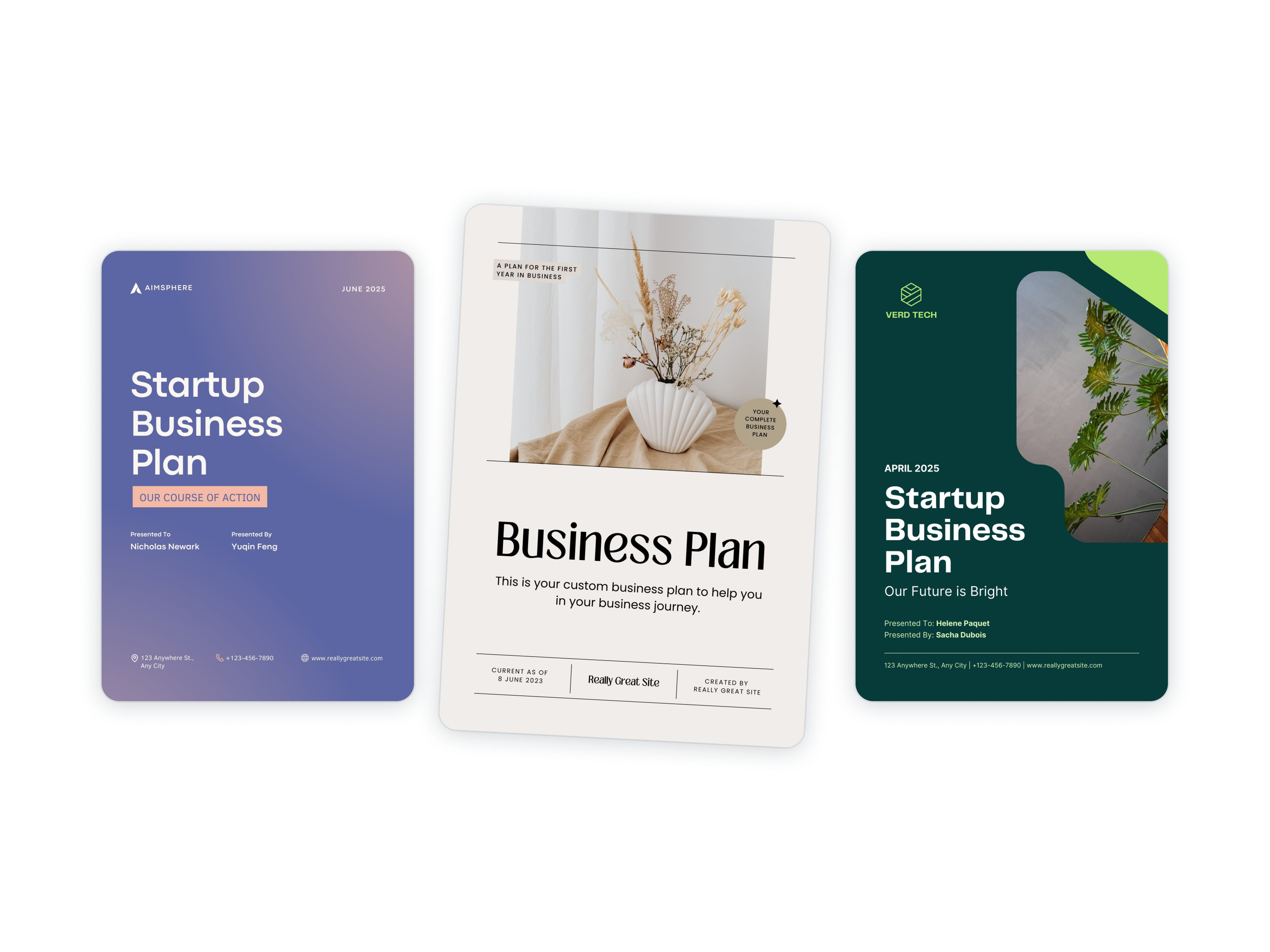
Canva's free templates follow the pitch deck structure, with slides dedicated to the problem, solution, and other essential parts of your pitch. Our pitch deck presentation templates(opens in a new tab or window) also have sample graphs for market size, traction, and other relevant data. With a great jumping-off point, it will be easy to craft a convincing pitch deck.


All you need in a pitch deck maker
There’s a certain pressure when you’re creating a pitch deck. But Canva's pitch deck creator will take the stress out of it. It’s packed with features, like AI-powered design tools, brand kits, and collaborative functions, to help you make a winning pitch.

Collaborate on the presentation in real time
Comment, assign, tag, and edit with teammates. Allow multiple presenters to control slides with Remote Control.

Fast-track presentations with AI
Speed up the presentation-making process with AI tools like Magic Design, Magic Animate, and Magic Write.

Stay on brand
Start with a brand template or apply your Brand Kit to keep every presentation on-brand and consistent.

Expand your Presentation to a Whiteboard
With just a click, expand your presentation slide into an infinite, collaborative whiteboard.

Interact with your audience
Engage the audience on Canva Live with reactions and Q&A. Use Magic Shortcuts to delight them with fun effects.

Record presentations to watch on-demand
Narrate presentations and record your entire screen so people can watch it from anywhere, at their own pace.
Pitch deck best practices
Investors have sat through a ton of pitch decks; it’s easy for them to say, “I’ve seen this all before.” You’ll have to exert more effort to stand out. Here are actionable tips to make your presentation memorable and get the desired results.
Keep it to 10 to 15 slides
Investors often have limited time to review pitch decks. So if you get an opportunity to pitch, make sure your presentation is concise and to the point. Aim for 10-15 slides, focusing on the key aspects of your business. Each pitch deck slide should highlight a single idea or message, avoiding unnecessary details. Use straightforward language to communicate your points.
See how this sample pitch deck condenses key information in 10 slides:

Stay on brand
Consistent branding throughout your pitch deck creates a professional and cohesive look. Use your company’s colors, fonts, and logos on each slide. Brand Kits(opens in a new tab or window) can help you or your team stay on brand when creating pitch decks. Not only do they reinforce your brand identity, but they also make your pitch look polished.
Show impact through visuals
Visuals significantly improve your pitch by making complex information easier to understand and remember. Use high-quality images, infographics, and charts to illustrate your points. Visuals break up text-heavy slides and sustain your audience’s interest.
See how the bright, geometric elements in this pitch deck template gave the slides personality and made the content more engaging:


Practice your pitch
Delivering your pitch confidently is just as important as the pitch itself. Practice your presentation multiple times to get comfortable with the flow and timing. This helps you deliver your message more naturally and effectively.
For remote audiences, consider using Canva Live(opens in a new tab or window), which allows you to present your pitch deck online. With a simple 6-digit code, your audience can jump into your live session, join the Q&A, send reactions, and participate in the pitch. Practicing with Canva Live can help you adapt to different formats and ensure you’re prepared for any setbacks.
Be prepared for questions
Investors will likely have questions about your business. Anticipate potential questions and have clear answers ready. Here are common questions to prepare for:
- How did you decide on your pricing?
- What factors can make your business fail?
- What are the key metrics to measure your growth?
- What are the milestones for this business?
- On top of everything else mentioned, why should I invest in you?
Practicing with colleagues or mentors can help you refine your responses and improve your ability to think on your feet during the actual pitch.
Pitch deck FAQs
The primary purpose of a pitch deck is to provide an overview of your business to potential investors, partners, or clients, with the goal of persuading them to invest in the business, purchase a product, form a strategic partnership, or secure a grant.
Different professionals need a pitch deck to achieve their goals:
- Startup founders and entrepreneurs use pitch decks to secure investor funding. This is the role of most pitch decks.
- Sales teams use pitch decks to sell products or services to potential clients.
- Executives use pitch decks to present strategies and make partnerships attractive to potential partners.
- Nonprofits use pitch decks to attract donations and grants.
A pitch deck should be short and sweet, consisting of 10-15 slides. Investors and busy professionals don't have hours to spare. You want to deliver a concise message that sparks their interest and leaves them wanting to learn more.
A good pitch deck is clear, compelling, visually appealing, data-driven, and concise. The information should be presented straightforwardly, using storytelling techniques to engage the audience. High-quality images and consistent branding enhance visual appeal.
Support your claims with relevant data and market research, and keep the slides focused on one main idea. To help you make a good pitch deck, explore our guide and best practices.
Investors want to see the potential for significant returns on investment. As such, your pitch deck should clearly explain the problem, solution, and business model. Investors also want evidence of a significant market opportunity, verifiable progress (like user growth or revenue milestones), and realistic financial forecasts. Information about your team’s background and a clear funding request with intended use are also essential.
Open the Uploads tab on the editor and drag and drop your photo or video from your device. Then, click on it or drag and drop it to your pitch deck presentation.
Was this page helpful?
Seal the deal with an impressive pitch deck