- The principle of randomness in graphic design
The principle of randomness in graphic design
In life, we don’t always think of randomness as a good thing. After all, who wants to deal with an irregular train timetable or an unreliable friend who may or may not turn up when you meet? But while predictability and routine can make us feel safe, it can start to become a little monotonous after a while. The same goes for design!
The principle of randomness is incredibly important in graphic design. While there’s certainly a time and place for well-structured, ordered and immaculate designs, a touch of spontaneity can often be just the thing you need to elevate your work.
Below, we delve into why randomness can be a strength in graphic design, examples of how brands use it effectively and actionable tips on how you can harness it in your own designs.
What does randomness mean in graphic design?
Generally speaking, randomness is defined as a non-repeating, unbiased, non-patterned sequence of values.
We see examples of randomness in nature all the time, such as the weather or the rise and fall of waves, but when it comes to humans, we generally talk about randomness in relation to random selection—choices made without conscious bias. Think of pulling a name out of a hat or using a random generator online to select the winner of a competition.
In the visual world, randomness refers to elements that don’t appear to follow any sort of intentional pattern or sequence.
A great example of pure randomness are artists who throw paint at a canvas for their artwork(opens in a new tab or window) take on a life of its own. Of course, when it comes to design, not everything that appears random has actually been created that way. Generally, there’s always some degree of human agency involved in the creation process.

Straw Sheet removed. Image via Advanced Graphic Design & Typography.
In this project, the straws seem to have been ‘randomly’ removed from each image. But in reality, the artist has consciously removed the straws to create a visually engaging effect.
In digital design, embracing true randomness becomes even more challenging. After all, due to its use of digital technology, it’s a pursuit where creativity and order are so deeply intertwined. Thankfully, your process doesn’t have to be truly random to create a surprising and spontaneous effect—as we’ll explore in this article.
Why is randomness a principle element in design?
Randomness serves a multitude of purposes in design. Firstly, it provides an element of surprise. When something falls outside of convention, it’s far more likely to catch the viewer’s attention.
For example, imagine seeing a dog in a tutu outside your car window—naturally, you’re going to do a double-take! In a world where many of us are constantly bombarded with visual information, the double-take is definitely a good thing when it comes to graphic design.
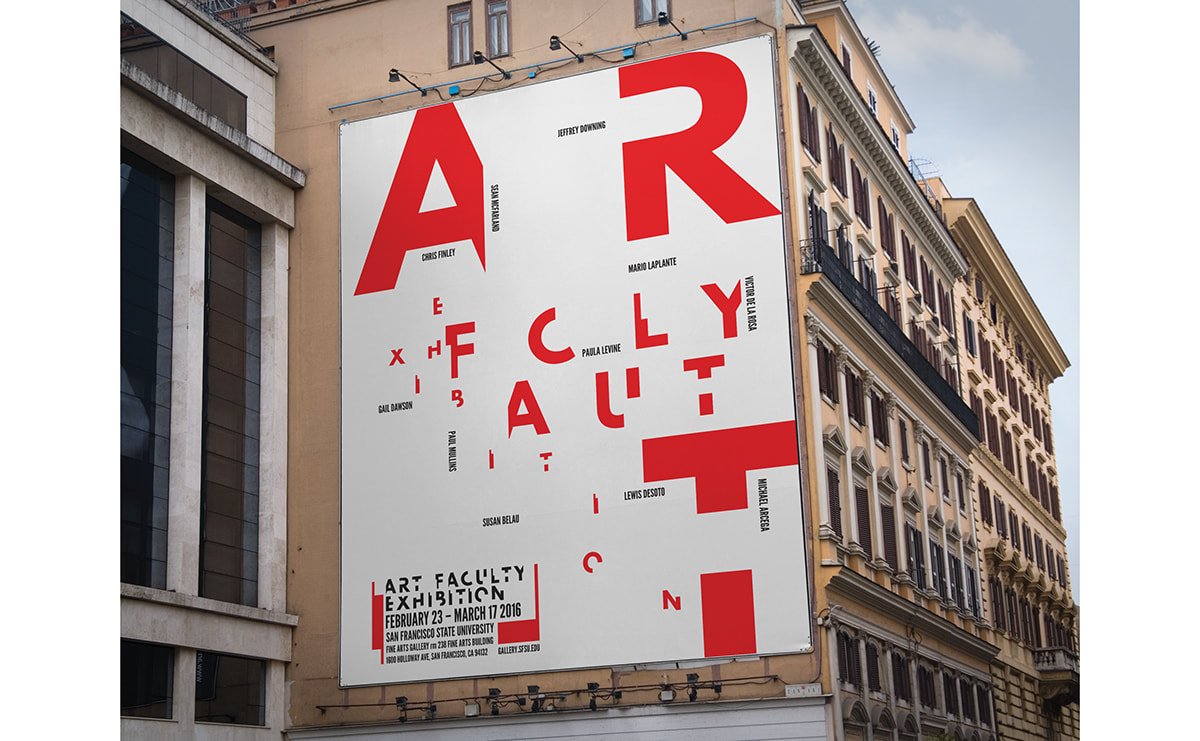
Art Facility Exhibition billboard. Image via Behance.
Making use of irregular sizing, random spacing, and cut-off text, this billboard for the Art Facility Exhibition is a great example of the element of surprise in action. If the artist had used the same sizes and spacing, this advertisement would likely be far less impactful. To visualize creative ideas like this, a billboard mockup(opens in a new tab or window) can help ensure the design retains its impact before going live.
Another benefit of randomness in design is that it can make it seem more human. While perfectly symmetrical and structured designs may look aesthetically pleasing, they can seem overly manufactured.
In Japan, there’s a philosophy called ‘Wabi-Sabi’, which is embracing imperfection in design (as well as life) Using randomness is an excellent way to channel this philosophy in your work.
Embracing randomness can also be helpful to you, the artist, during your creative process. Often, when we sit down to create a ‘perfect’ design, it can lead to overthinking which inhibits the creative process. Being open to simply following your own instincts can help take the pressure off and get you into a state of flow.
Randomness vs. rules
In design, the antithesis to randomness is rules and repetition. That is things that follow a logical and structured order. So, how do you know when it’s time to follow the rules or break them? As with anything in design, it’s crucial to consider the application, audience, and purpose of your work.
Randomness tends to work best with a more abstract or contemporary look(opens in a new tab or window) or on occasions where it’s appropriate to use a little more creative license. However, you’re probably less likely to use it on something like an instruction manual, or a poster outlining the emergency procedure in your workplace—as this may just confuse your audience. When it comes to using randomness, read the (metaphorical) room.
That said, randomness doesn’t need to be all or nothing. Sometimes, it can be as simple as adding more surprising touches to an otherwise methodical design.
Examples of randomness in design
Sometimes, in order to understand the power of randomness in design, you need to see in action! Here, we take a look and some designers and artists who have used it to give their creations a compelling visual edge.
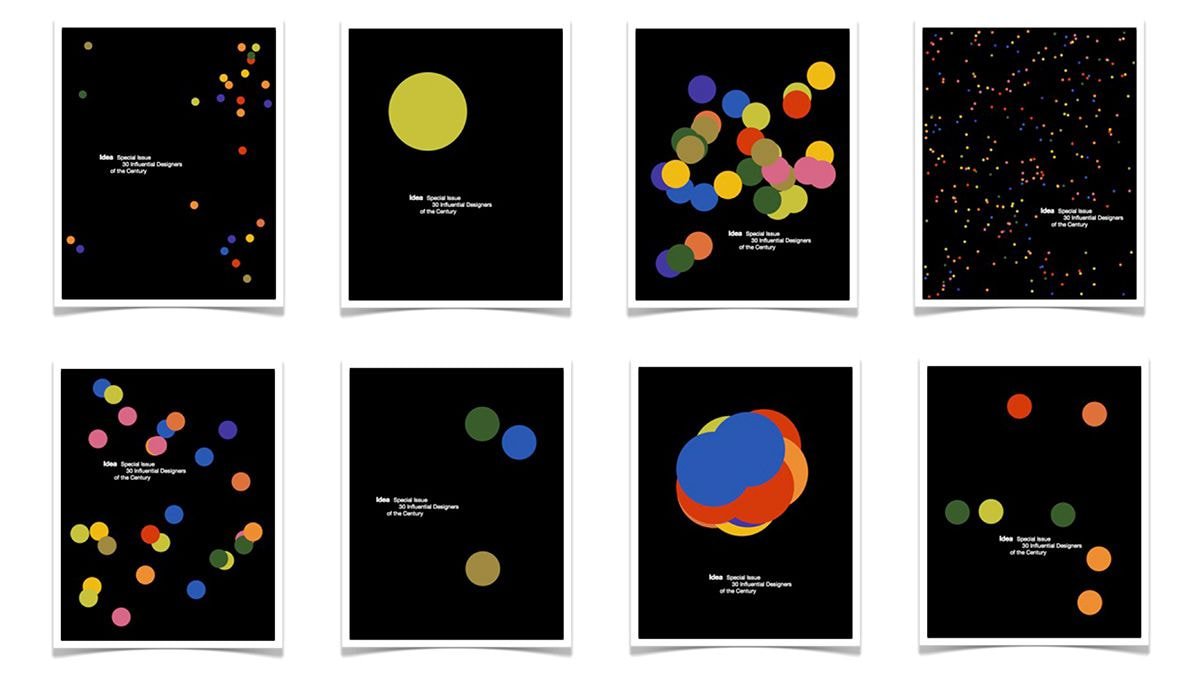
Random design by Paul Rand. Image via Print Code.
In this series by Paul Rand, a series of colorful dots create a stark contrast against a dark background. While the size of the dots remains the same in each individual frame, the colors and locations of them have been randomized. This is a great example of how having one consistent control element can help balance out the randomization.

Die Neue Typographie postcard by Maria Mahdessian. Image via Behance.
Random is the name of the game in this Die Neue Typographie postcard by Maria Mahdessian! From the positioning and weighting of the text to the slightly faded stamp effect, nearly every element seems to have been haphazardly thrown onto the page to create a dramatic, Avant-Garde effect.

Cover design by Zhuoshi Xie. Image via Behance.
Designed by Zhuoshi Xie, this book cover for a John Cage novel is an excellent example of how randomization doesn’t always have to smack you in the face. Sometimes, it’s the more subtle, unexpected touches that are the most effective. From afar, this might just look like a red pattern, but on closer inspection, it’s a random jumble of letters that creates an almost eerie effect. And it works!

Wiggler 804 by Ricardo Donato. Image via Behance.
Titled Wiggler 804, the designer Ricardo Donato describes this project as an exploration into “the dichotomies between man/machine, chance/control, randomness/predictability, bringing to the surface of the pages some metalinguistic strategies.” This is reflected in the final product—it perfectly straddles the line between randomization and structure to create an expressive design.
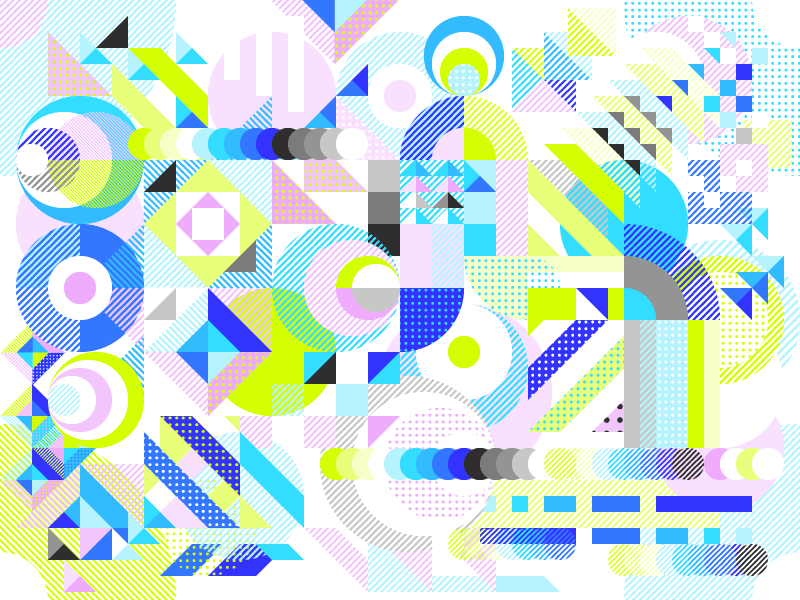
Colorful randomness by Dizzyline. Image via Dribbble.
There’s nothing subtle about the randomness in this project by Dizzyline! A wide palette of colors, irregular shapes and lines, and unsystematic patterns have been used to create an abstract pattern that is a joy to look at.
Tips for using randomness in design
So, how do you use the principle of randomness in graphic design without ending up with a final product that looks messy or unfinished? Here are some strategies for harnessing the power of spontaneity in your own creations.
Use imperfect grid structures
Using grids(opens in a new tab or window) in your designs is always a great way to make them look more polished and ordered. However, these don’t always have to be perfectly even and symmetrical. In fact, sometimes it can add far more visual interest not to.
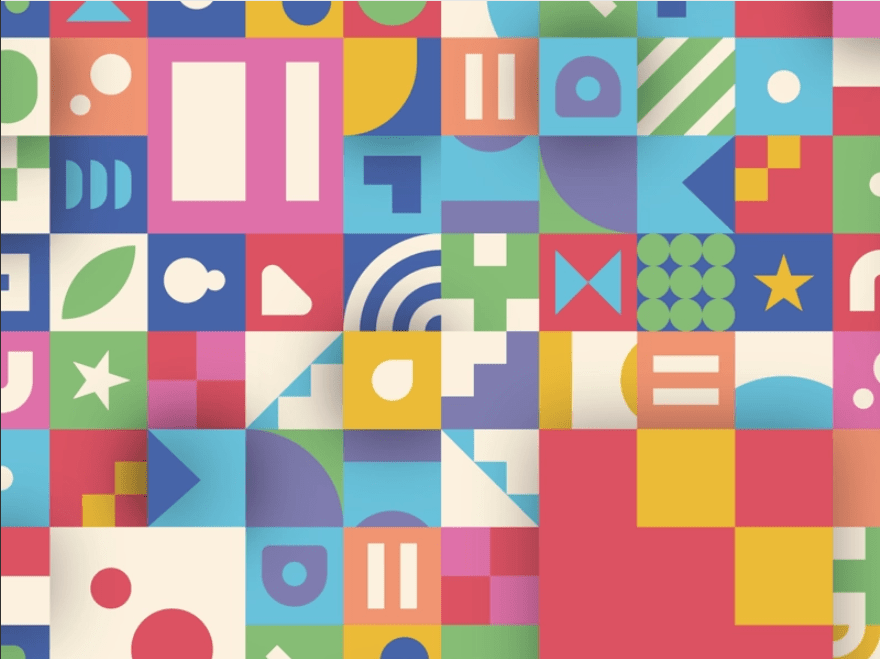
Square pattern by Chris Morrison. Image via Dribbble.
In this design by Chris Morrison, you can see how most of the squares in the grid are the same dimension. However, there’s the occasional square thrown in there that is much larger, and there appears to be no rhyme or reason behind where these are situated. Further adding to the visual unexpectedness is the patterns without the grid, that also appear to follow a random sequence.
Want to achieve a similar aesthetic in your own designs? Canva’s Colorful Grid Process Flow Chart(opens in a new tab or window) uses a perfectly imperfect grid structure to help you get the look.

Shake up your patterns
While the very definition of a pattern is something that follows a predictable sequence, they can also be used to achieve quite the opposite effect. By creating breaks in your patterns, or using randomized combinations of them, you can add an eye-catching element of surprise to your designs.

Collaboration Exhibition Branding, by Shanti Sparro Design. Image via Behance.
You can see this effect in full-force in this poster for Collaboration Exhibition Branding, by Shanti Sparro Design. From the squiggles to the squares, the designer has used seemingly random clusters of patterns to create a visually powerful effect. There are so many things going on in this poster that it’s naturally going to hold the viewer’s attention for longer as they try to take it all in.
Use shapes, blobs(opens in a new tab or window), and other small patterns and place it around the areas without any thought, just like how it is with the Red Black Friday Discount Flyer(opens in a new tab or window) template.

Play with shapes
You can also use the shapes(opens in a new tab or window) within your patterns to create a randomized effect. Taking the same shape and using it in different colors and sizes or facing them in different directions can be used to create captivating designs.
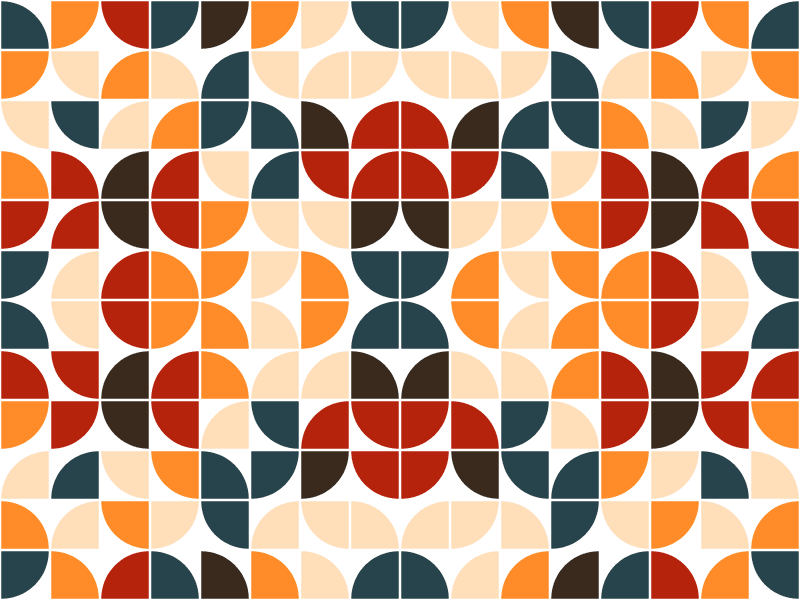
Quarters of Pie by Misha Heesakkers. Image via Dribbble.
In this project titled Quarters of Pie, designer Misha Heesakkers has done this by taking the same semi-circle shape in an array in colors and flipping them in different directions. In doing so, they’ve created just the right balance of homogeneity and spontaneity.
Rather than starting from scratch, you can use Canva’s Orange and Blue Geometric General Linkedin Banner template to create a similar abstract effect with shapes.

Randomness through repetition
While it may sound counterintuitive, combining randomness with repetition can create a winning visual effect. This is when you add occasional unexpected elements to an otherwise predictable pattern.

Cultural Explosion by Hao
Here, designer Hao Zhuang has incorporated into this effect in his Cultural Explosion concept. Against the otherwise repetitive layout of the computer windows, the various screens depicting people creates a striking ‘glitch’ effect.
Want to put a stunning spin on repetition in your own designs? With a background of randomized icons, Canva’s Red Shape Pattern Clothing Label(opens in a new tab or window) template is the perfect place to start.

Use a random design generator
Sometimes, embracing randomness in your designs can be easier said than done. After all, the idea that design needs to be ‘perfect’ can be quite deeply ingrained in many of us—which makes it hard to let go. In these cases, random design generators can be useful for loosening the creative reigns.
Sharpen is an excellent tool that gives you millions of practice design prompts to challenge you to think outside the box. By prompting you to—for example, design a homepage for the first lunar colony—it forces you to explore design avenues you may otherwise not have, which can spark inspiration!
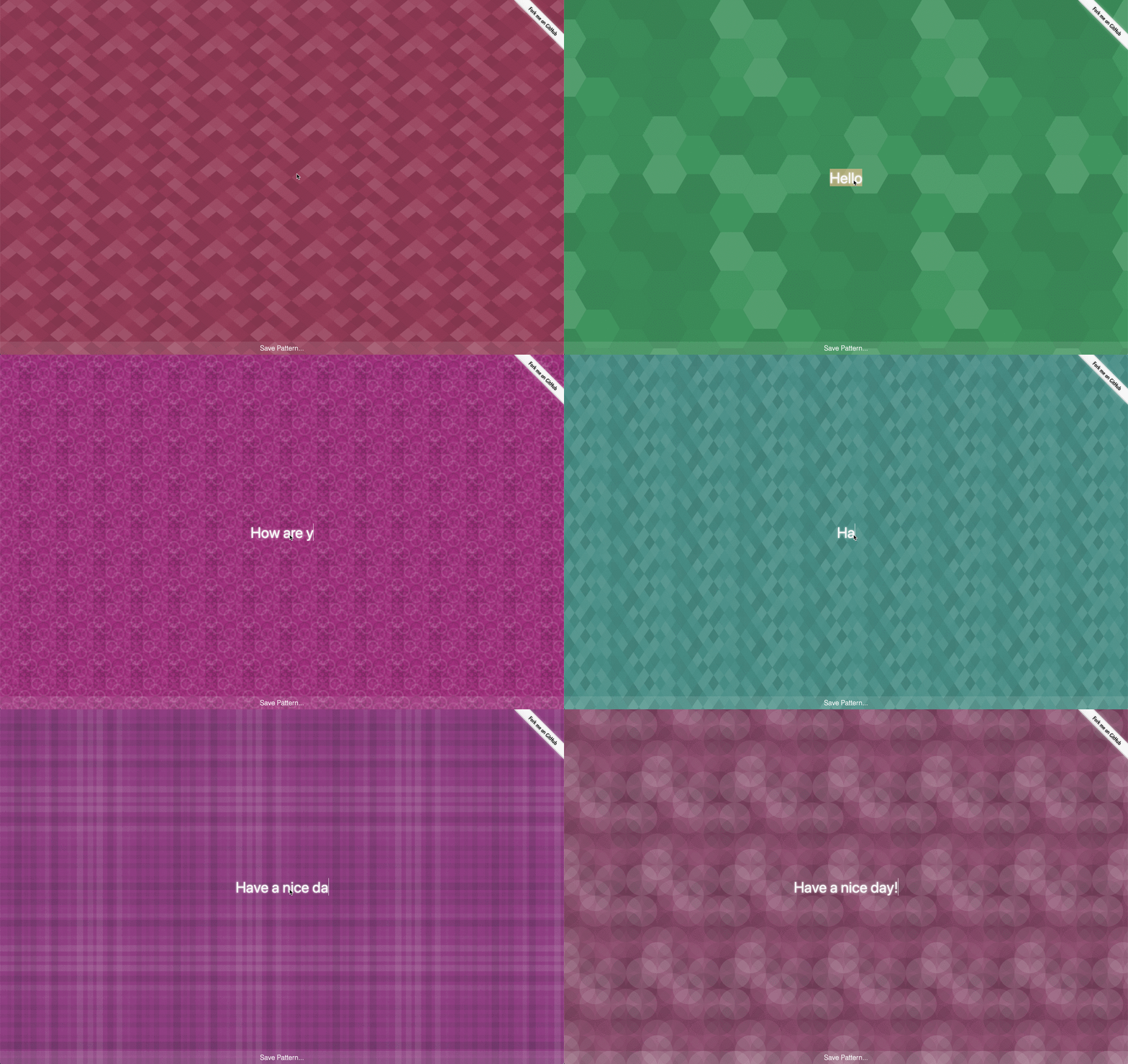
Geopattern uses the text you type in to randomly generate a different pattern.Geopattern(opens in a new tab or window) is another excellent tool for randomization. All you need to do is put in your own text and it will auto-generate a patterned background for you. Similarly, Random.Org(opens in a new tab or window) allows you to generate random colors based on hexadecimal codes.
Canva also has a couple of our own tools that can help with randomization. Our Color Wheel(opens in a new tab or window) tool generates a complementary color scheme(opens in a new tab or window) based on one color you input. While this may not be completely random, it can still help you broaden your design horizons. Our Logo Maker(opens in a new tab or window) is another helpful tool that uses AI to generate a polished logo for you, based on your brand name, industry and preferred style. You can also try our Random Image Generator(opens in a new tab or window) to create unique AI-generated images for your designs.
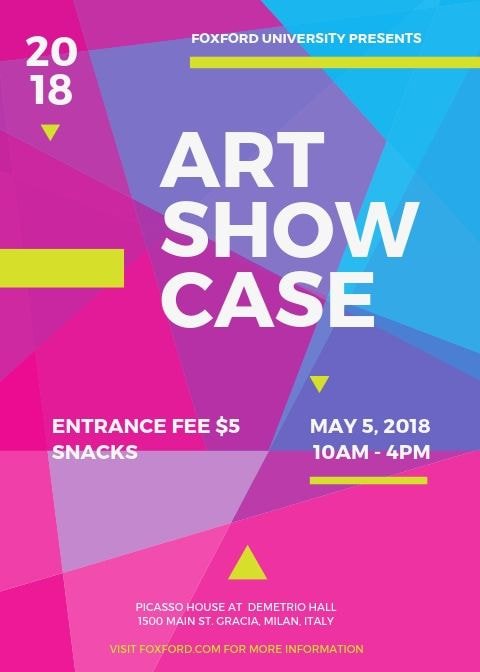
Interesting random patterns can be made by layering shapes of different sizes and colors and adjusting transparencies. Check out the Art Event Flyer(opens in a new tab or window) to get the look.
Unlike an abstract art class, using the principle of randomness in graphic design isn’t as simple as just throwing paint at a canvas. In order to make it work, you sometimes need to abandon your preconceived judgments about what design should look like and instead, just let your instincts guide you. The good news is, the tips and examples in the articles can help steer you in the right direction! By incorporating them into your own work, you can create designs that make your viewers say “wow, that’s so random” in the best possible way.
Written by
Emma Norris