- The business cards of some of the world’s most famous people
The business cards of some of the world’s most famous people
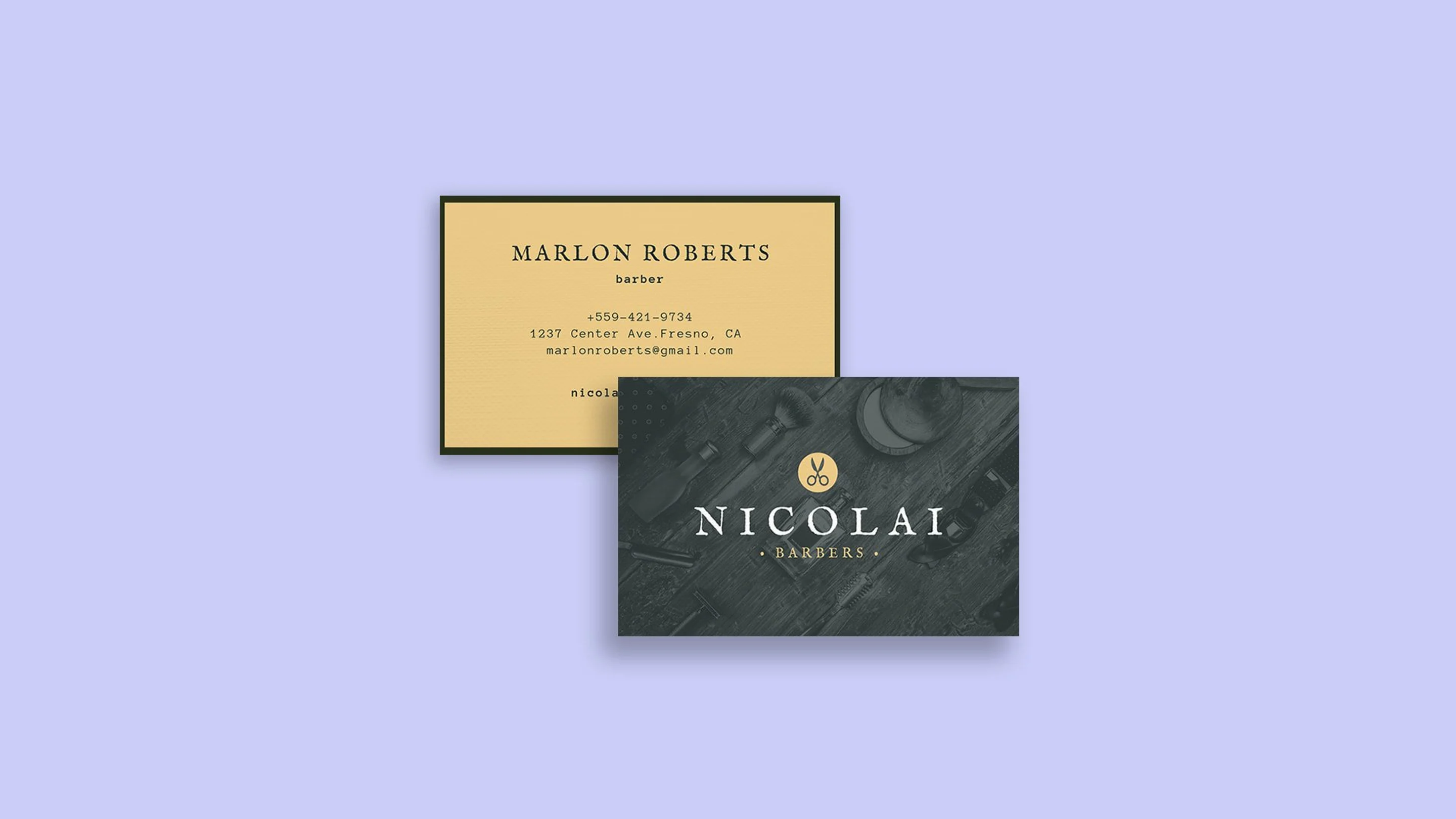
A business card(opens in a new tab or window) is an easy and memorable way of introducing yourself and your business to potential colleagues, clients, and customers. And as it turns out, there is such a thing as famous business cards—well, the business cards of famous and influential people throughout the last century.
Let’s take a look at the famous business cards of some of the world’s biggest movers and shakers and see what design tips and tricks you can take and apply to your own business card.
Steve Jobs

Image via MacRumors.
Steve Jobs built his legacy off simple but stylish design. From his signature black turtleneck and glasses to the sleek designs of the Macbook and iPhone, Jobs was not only a genius businessman, but he also knew how to leverage design to make a statement about himself and his brand.
So it’s no surprise that he did the same with his business card. Jobs’ business card was—like all of Apple’s branding—simple, sleek, and elegant. The card is primarily white space(opens in a new tab or window), with italic, gray typography; subtle bolding of both Jobs and Apple’s company name; and the iconic Apple logo in the upper left corner of the design.
The element that keeps this card from veering into “boring” or “generic” territory? The fact that Jobs decided to use Apple’s multi-color logo; that pop of color (which resembles an apple-shaped rainbow of green, yellow, orange, red, purple, and blue) jazzed up the otherwise simple card design.
Design tips we’ve learned from Steve’s business card:
- Simple designs are effective and timeless.
- If you’re going to keep most of the elements on your business card simple and traditional, make sure to add at least one element (like a pop of color, interesting typography, or a patterned background) to add visual interest.
Want a business card that evokes Steve Jobs’ early Apple days? Get started with these Canva templates: Basic Communications Director Business Card(opens in a new tab or window), Gray Cube Web Designer Business Card(opens in a new tab or window), and Feminine Corporate Business Card(opens in a new tab or window)


Andy Warhol

Andy Warhol's calling card is simply his details written in his own penmanship. Image via Inkbotdesign.
Andy Warhol was one of the most creative visual artists in history. Known best for his paintings that put a pop art spin on well-known imagery (like Campbell’s Soup Cans, Gold Marilyn Monroe, Orange Disaster #5, and Mickey Mouse)—as well as his iconic studio, The Factory, a popular New York spot among the famous, artistic, and bohemian crowds of the 1960s and 70s—Warhol was anything but ordinary. And so were his business cards.
Warhol threw all conventional ideas of what a business card should look like when designing his card, forgoing traditional elements (like nondescript fonts and neutral colors) for bold shades of blue and green and whimsical, signature-inspired typography.
Design tips we’ve learned from Andy Warhol’s business card:
- Your business card should be a reflection of who you are, so if you’re creative, embrace it! The more unique, bold, and daring you are in your business card design, the more likely you are to make an impression.
Inspired by Andy Warhol’s bold colors, font, and pop art style? Capture the same whimsical feel with these Canva templates: Pink Blue Funky Retro Business Card(opens in a new tab or window), Green and Pink Pattern Funky Business Card(opens in a new tab or window), and Colorful Funky Business Card(opens in a new tab or window).


Evan Williams

Former CEO of X (Twitter) Evan William's business card. Image via Informance.
You might not immediately recognize Evan Williams’ name—but you’ll definitely recognize the empire he’s built. Williams is an internet entrepreneur and the co-founder and former CEO of X (Twitter). During his tenure as CEO, Williams took X (Twitter) from a small microblogging site to the world’s third most-used social network and one of the most recognizable brands in the world.
You’d be hard-pressed to find anyone who uses the internet who doesn’t immediately recognize Twitter’s iconic bird logo. Williams wisely let that logo take front and center in his business card design, opting to showcase the it while keeping the rest of the design elements simple and understated.
Design tips learned from Evan Williams’ logo design:
- The entire point of a business card is for people to remember you and your brand—so make sure to make your branding and logo the focal point.
- This is true for every business card—but it’s even more true if your logo is one that people are likely to recognize.
Feeling inspired by Williams’ logo-centric business card design? Recreate the look with these Canva templates: Red Graphic Design Business Card(opens in a new tab or window), Blue Minimalist Graphic Design Business Card(opens in a new tab or window), and Vector Graphic Design Business Card(opens in a new tab or window).


Richard Nixon
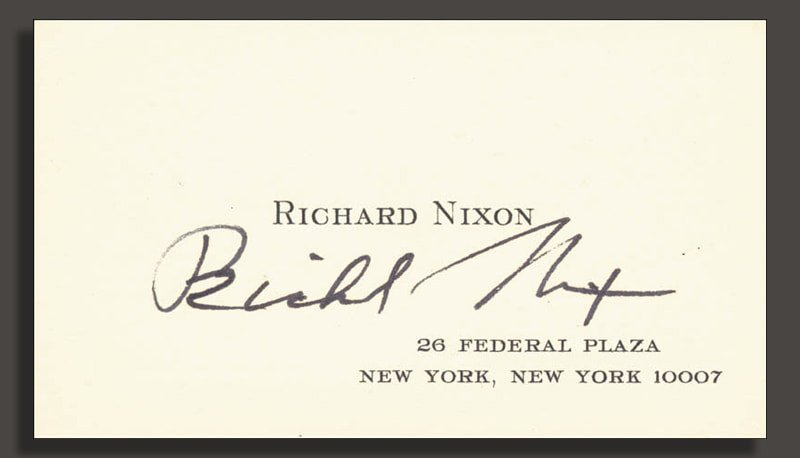
Business card of former President of the United States, Richard Nixon. Image from History for Sale.
Thanks to the Watergate scandal, Richard Nixon has gone down as one of the most infamous Presidents in the history of the United States.
Nixon’s business card design is everything you’d expect from a political figure; it’s understated but strong; traditional but unique; classic and timeless. And the former President’s signature—which is prominently displayed in the center of the card—lends a personal touch that keeps the card from going into forgettable or generic design territory.
Lesson learned from Richard Nixon’s business card design:
- Some professions require a more classic or traditional business card design(opens in a new tab or window).
- By adding your own signature to the design lends a personal—and memorable—touch that will help your otherwise simple card stand out from the pack and make a lasting impression on your audience.
Want to add a personal touch to your business card with a signature-inspired look? Check out these Canva templates: Black Bold Script Graphic Design Business Card(opens in a new tab or window), Black and White Logo Freelancer Business Card(opens in a new tab or window), and Black and White Event Planner Business Card(opens in a new tab or window).


Walt Disney

Walt Disney's business card. Image from IWSMT.
Walt Disney was one of the earliest pioneers of animation. He pushed the boundaries of what was possible and forever changed the way the world looked at animation. Walt Disney went on to build an iconic brand known the world over for bringing some of the animation world’s most enduring and beloved stories to life—including Snow White and the Seven Dwarfs, Cinderella, The Little Mermaid, The Lion King, and Frozen.
Disney may have gone on to become one of the most famous entertainment executives in history, but in his early days, he was a cartoonist and animator. His early business cards featured a hand-drawn cartoon of Disney sketching at his desk. So not only were his cards a way to give his contact information to potential clients, but also a way to show off his artistic talent and give people a concrete example of what he did best.
Design tips from Walt Disney’s business card:
- If possible, use your business card design as more than a way to share contact details and look at it as an opportunity to show off what you actually do. Disney was a cartoonist, so his business card featured a cartoon—but the idea works for a lot of different artistic mediums. For example, if you’re a graphic designer, showcase a logo design(opens in a new tab or window). If you’re a photographer, feature one of your photos(opens in a new tab or window).
Want to take a page from Disney’s book and show off your skills on your business card? Get started with these Canva templates: Black And White Photographer Business Card(opens in a new tab or window), Light Brown Furniture Interior Design Business Card(opens in a new tab or window), and Black Vintage Photographic Business Card(opens in a new tab or window).


Bill Gates

Bill Gates' business card from 1979. Image via Rethrill.
Today, Microsoft is one of the most recognizable brands in the world, and its co-founder, Bill Gates, is a household name.
But Gates’ first business card from 1975 couldn’t be anything further from the sleek branding Microsoft is known for today. From the burnt orange and gold color palette to the psychedelic logo, Gates’ original business card screams of the 1970s. And while the design might feel dated today (even though it does maintain somewhat of a nostalgic charm), at the time, it was fresh, current, and on-trend—something that likely helped Gates to stand out and make an impression.
Design tips from Bill Gates’ business card design:
- Gates embraced the current design trends when he had this card made in 1975—and you can do the same in 2019.
- A business card that leverages what’s hot in the design world can lend a fresh, timely feel to your design—and let your clients, customers, and colleagues know you’ve got your finger on the pulse of current trends.
Want to recreate the vintage feel of Bill Gates’ throwback business card? These Canva templates will help get you there: Grey and Brown Barber Vintage Business Card(opens in a new tab or window), Vintage Red and Green Roses Tattoo Business Card(opens in a new tab or window), and Cream Typewriter Writer Business Card(opens in a new tab or window).


The Beatles

Business card of The Beatles. Image via Digital Printing Ireland.
There’s arguably no band in the history of music that made the same kind of lasting impression as John Lennon, Paul McCartney, George Harrison, and Ringo Starr. But before Beatlemania took over the globe—and the four boys from Liverpool changed the music industry forever—they were just another local band looking to book a few gigs.
And this is the business card they used to do it. The Beatles’ business card proves that sometimes, simple is best.
Lesson learned from The Beatles’ business card design:
- It doesn’t matter who you are, what you do, or how simple you want to keep your design—having a business card is a non-negotiable.
Want to model your business card design after The Beatles? Keep things simple with these Canva templates: Black Bold Script Graphic Design Business Card(opens in a new tab or window), Cream and Brown Elegant Fashion Business Card(opens in a new tab or window), and Template name(opens in a new tab or window).


There’s a lot to learn from the world’s most famous business cards, so get designing!
There’s so much to learn from the business cards of the world’s most famous people. And if you can take those design lessons(opens in a new tab or window) and apply them to your own design using Canva's business card mockup(opens in a new tab or window), there's no reason your business card can’t make as big of an impact as Jobs, Gates, or McCartney. So get out there and get designing!

Written by
Deanna deBara