- How to write a design brief that gets you results
How to write a design brief that gets you results

Great creative projects start with a great design brief(opens in a new tab or window).
Whether you're the client, the designer, or an account manager, you have a vested interest in making sure the goals and scope of your project are crystal clear. A great design brief is like a roadmap(opens in a new tab or window).
So, what exactly is a design brief? It's a short document(opens in a new tab or window)—usually just one or two pages—that clarifies the strategy for a creative project. It documents the goals of the project and starts the plan for how you'll get there.
In this article, we'll give you tips on how you can create an effective design brief for your next creative project and help keep you on track.
01. Who is the client and what do they do?
What’s the size of the company and how long has it been in business? What is the product or service? How do the customers or clients talk about them?
Get more details: Have the client describe their business as if they just met you at a party—instead of the sales pitch they'd give at a conference.
People get in the habit of selling their business instead of talking about it.
Ask them to describe the company in layman’s terms if it’s something you’re not very familiar with. What do they love about their company and what are they most proud of?
02. What is the scope of the project?
What is the project? Why do they need designs? What materials do they need?
Consider this checklist:
- If the client needs a logo, do they want a type treatment, an image or both?
- If it’s a web design project, ask if the client also needs a developer and if they have a WordPress theme.
- The designer may be responsible for an entire ad campaign or new branding. Clarify what formats are needed for all of the deliverables.
- If there are print files, what sizes and formats are needed?
- If there are social media files, which platforms does the company use?
- If the designer is creating letterheads, do they need editable Word templates?
- The next important question: What is the deadline or deadlines? If there’s more than one piece, ask when each of the deliverables is due, and have them rank each by level of importance.
- If there’s an advertising schedule to follow, a blog calendar or deadlines for a publication, ask for those to be shared.
Doing it right: Clarify the extent of the campaign, how many platforms will be covered and how the design files will be used. This helps the designer to know, for instance, how the new logo will work online, in print and on other collateral pieces.
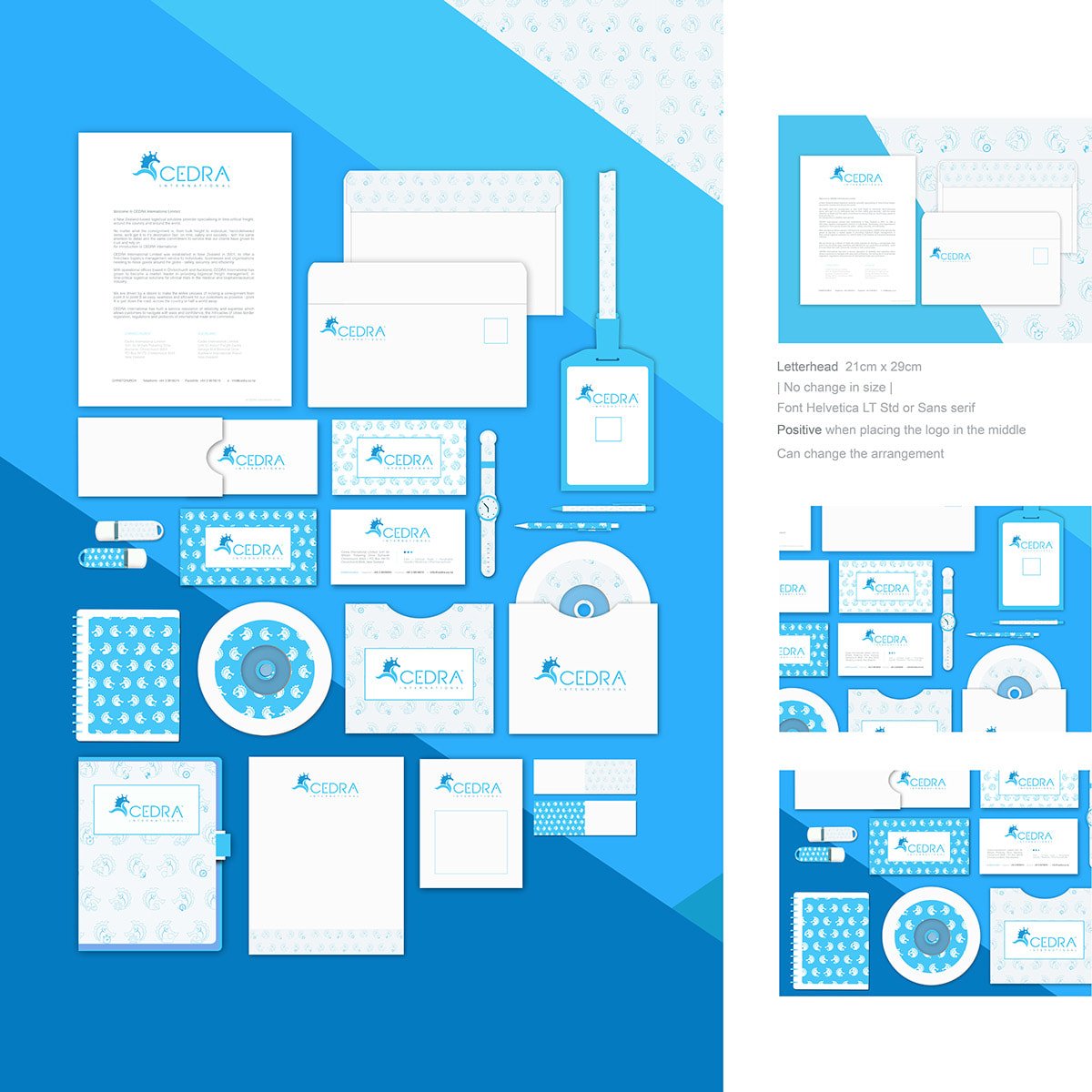
Cedra Branding campaign by Huu Qui / Behance


03. Who’s the audience or target market?
Describe the customer. What’s their age range, race and gender? What type of businesses are these customers involved with? How often do they buy or use their service?
Get more details: Can you put a face to that customer? For instance, is it a 30-something male or stay-at-home-mom?
04. Who’s the competition?
Defining the competition helps to clarify the landscape. It helps to clarify the strategy, too, so the designer can make savvy decisions about how to stand out from the crowd.
Get more details: Ask them how they want to be different than their competition. Do their customers often confuse them?
Doing it right: Two coffee shops sell the same basic product, coffee, but they appeal to their audiences in quite different ways. MadCap Coffee Company is bright, bold and urban. Assuming their customers are young, hip professionals is probably right on. Coffee Supreme is earthy, mellow and rustic. Their customer is most likely a little older and aware of the environment.

Madcap Coffee

Coffee Supreme
05. What tone or image do we need to portray?
Is the client high-end, helpful, friendly, techy or earthy? Do they want to be bold and dominant or easily approachable?
Get more details: What colors(opens in a new tab or window) does the client like—or not like? Maybe their competition uses blue and green, and they'd like to stand out. The CEO may also despise the color purple, so this is all good information to know ahead of time. You may want to ask what fonts appeal to them.
Consider a variety of serif, san serif(opens in a new tab or window) and script fonts. Does the client like straight-laced fonts that show seriousness? Or do they go for the scripty, handwritten ones that show they’re playful and welcoming? Is the photography they’re using professional or whimsical? This will help you figure out the tone of the design pieces.
Doing it right: Create a mood board. Pinterest makes it super easy, but you can also create a mood board on a bulletin or cork board. Tear out ideas from magazines, grab color swatches from a paint store and anything else that inspires you such as pieces of fabric or postcards. Start with a color, then add fonts or type treatments. Look for photos that illustrate the perfect customer. It’s just like putting together an outfit or decorating a room.

Carla Llanos illustrator / Pinterest

06. What is the ultimate goal and how will it be measured?
Is the company looking to grow their mail list, get more clients, gain awareness, sell more of their product or change their image? Ask how they’ll measure success of the campaign or the piece.
Is the goal 4,000 subscribers? Do they want to increase their sales by 10 percent? If you’re only designing a new logo(opens in a new tab or window) for them, there may not be any measurable results—so ask how the new logo will be used and how it fits into their new business plan.
Get more details: Do they have a call to action? Are they looking for customers to click through to buy their product, sign up for a course(opens in a new tab or window) or make a phone call?
07. What’s their budget?
This is the amount available to pay for the designer and the deliverables.
Get more details: Define whether the design budget is separate from the web development piece. Does the budget include any copywriting or photography? Do materials need to be printed? If so, has this been costed?
08. How should approvals and presentation of concepts be handled?
Ask who will be the main contact person for the project, and who will have final sign-off on all materials.
Get more details: If anyone else is to be included on approvals, make sure to get their name, email address, and phone number.
Doing it right: Putting the creative brief online for the design team is a fantastic idea.
Include links to the client’s website, design files and the examples they like: "Everything you need right at your fingertips. Connect Communications, Inc.’s brief is short but concise: It has every piece of information that you’d need, including how much they’re paying, what date the project started and who all of the contacts are".

Connect Communications, Inc.’s brief is short but concise.
09. What previous design and marketing materials have they used?
Besides looking at the website, ask to see what's being used now. What is working—and what isn't?
Get more details: Are there existing brand guidelines? Is the logo in an EPS, HEIC(opens in a new tab or window), JPG, or PNG(opens in a new tab or window) format? Are there required fonts or colors?
10. Are there other people responsible for other pieces of this project?
This is necessary information when you’re scheduling due dates and setting expectations. If you need to rely on others for information you’ll need before designing a piece, you should make sure the client provides it to you before you begin work.
Get more details: Will website(opens in a new tab or window) copy come from a copywriter? Is a photographer taking photos? All of those pieces should be completed and approved before they’re sent to you.
As soon as the initial call is done:
- Go through your notes and type up a clear, detailed brief and share it with anyone else on your team.
- Add links to the client’s website and social media profiles so they’re handy.
- Add all contact names, numbers and emails.
- If you're the designer: while your mind is fresh with ideas and excitement, jot down a few design ideas so they don’t vanish.
- It’s also a good idea is to put all deadlines immediately into your calendar and set up a thorough task list.
Related article: The ultimate guide to creating a checklist
If you're the designer, you should also plan to keep the design brief within view as you create concepts. It’s easy enough to put it in a pile and think you’ll remember everything. Review before you begin to design and again before you’re ready to present your concepts to confirm you’ve met the goals.
Recap: A successful project starts with an excellent creative brief

Finished product: branding campaign by design firm Anagrama for Xoclad.
A detailed and thoughtful design brief will lead to a successful end product—whether it's a logo(opens in a new tab or window), brochure or entire branding campaign(opens in a new tab or window). If you've nailed the target audience, know the budget, have a detailed list of all materials needed; know what the ultimate goal is and how it will be measured, you end up with a beautiful campaign that everyone will be pleased with. For the client, it's flexible enough to use across many platforms and will put them on the road to success. For the design, it will be a fabulous portfolio piece. To make planning even easier, you can also prepare a project brief(opens in a new tab or window) that outlines goals, milestones, and strategies in a structured way.
If you need to collaborate with international clients, you can make your creative collaborations smoother with a document translator(opens in a new tab or window) tool. Translate your creative briefs(opens in a new tab or window) for global clients with ease and ensure everyone's on the same page, or create professional business plan presentations(opens in a new tab or window) to showcase your ideas.
Let’s discuss: What’s the difference between a brief that works, and one that doesn’t?
That’s biggest difference between briefs that work and those that don’t is whether they contain all of the necessary information you’ll need for a project. Briefs don’t have to be pretty, but they do have to be informative. Here we compare three case studies, and look at what works best.
Case study #1
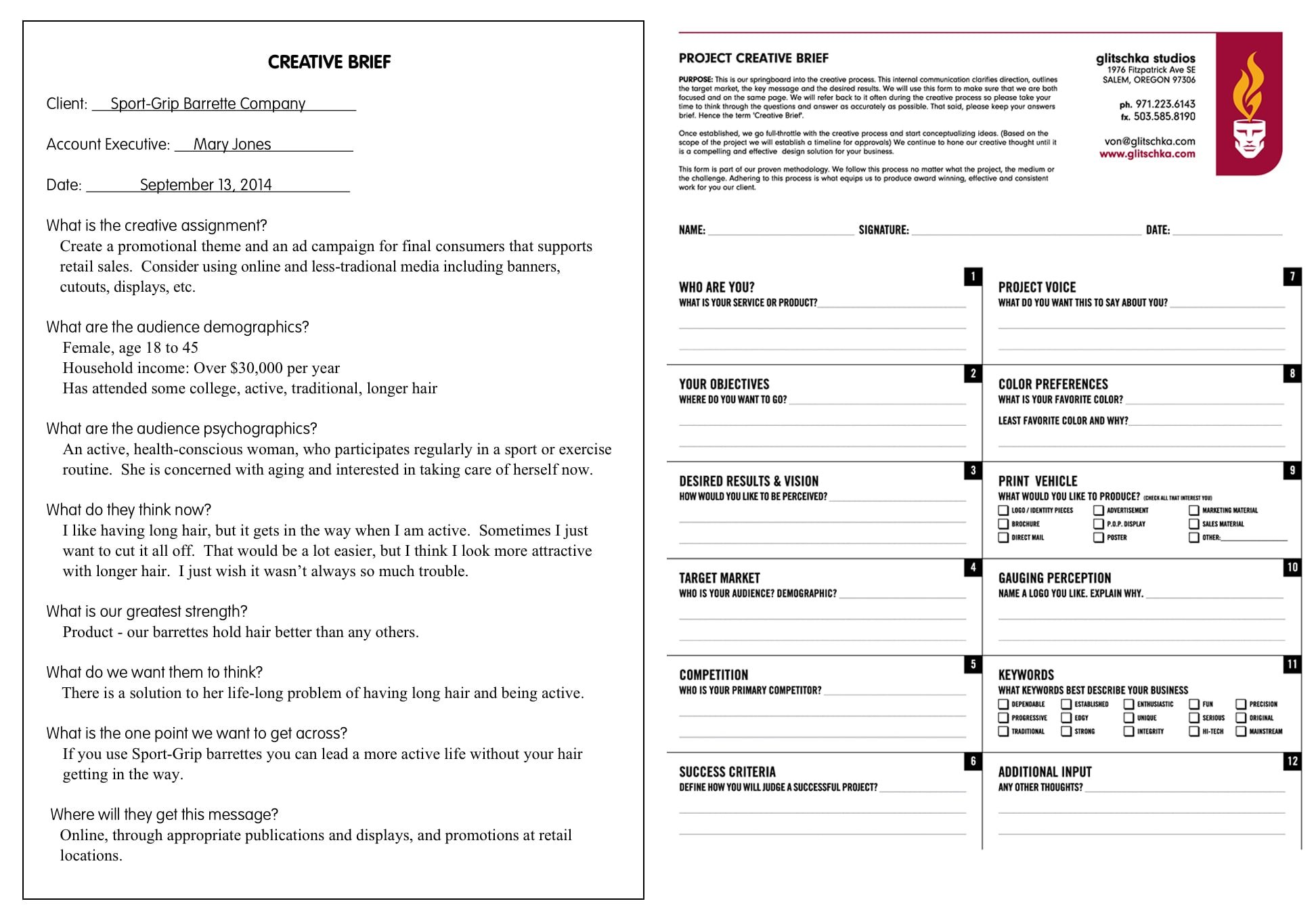
Andate Publishing brief vs. Glitschka Studios brief
The first brief, from Andate Publishing, contains a good deal of useful information but lacks just as much. The team knows what the overall project is, who the audience is and what their strengths are. But what they don’t know is who the contact person is, what the budget or deadlines are and what the tone should be.
Now take a look at the brief from Glitschka Studios. They ask many of the same questions about scope of project and audience. But they also want to know their color preferences and tone, where the materials will be printed and how to measure success of the project.
Case study #2
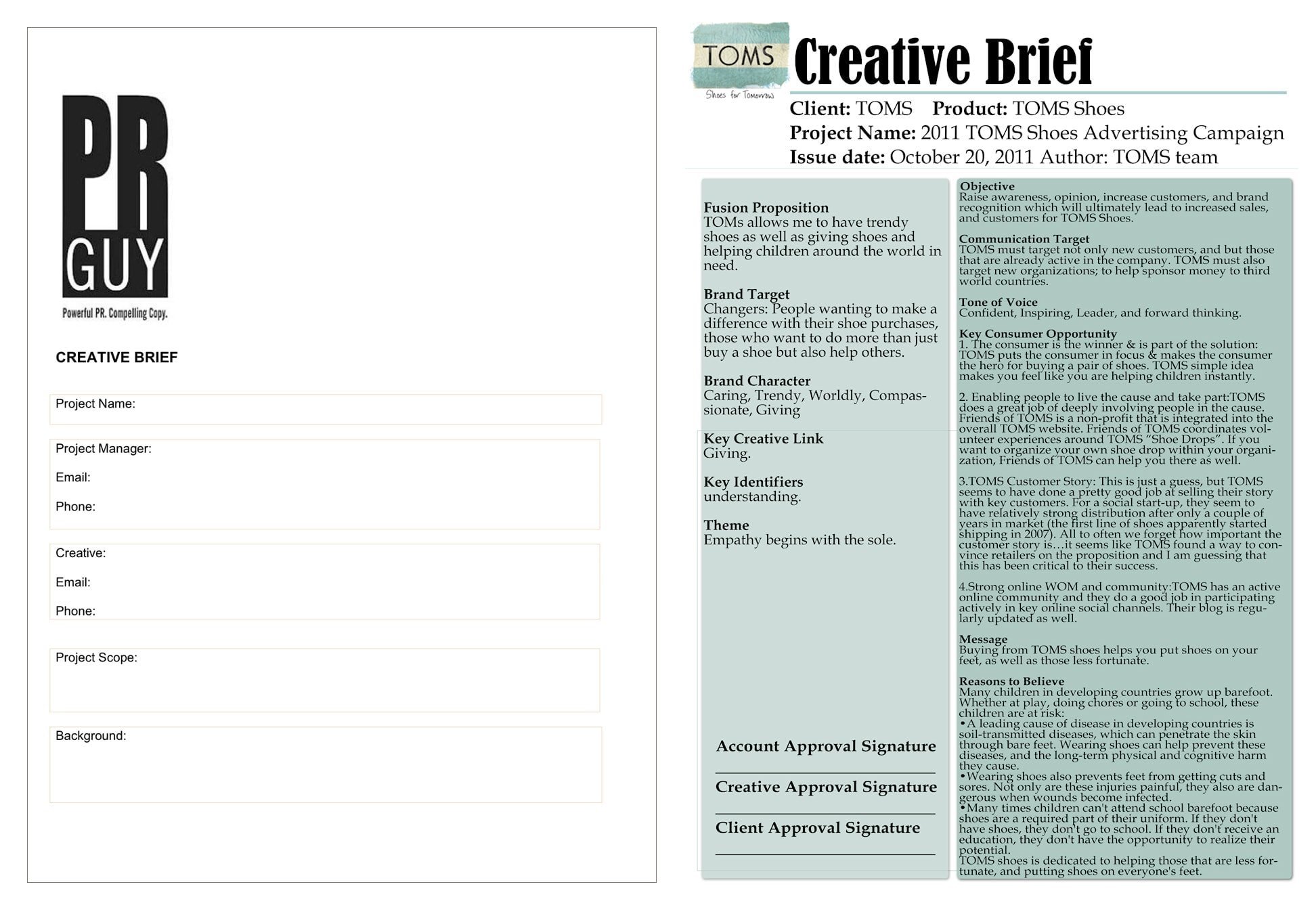
PR Guy Online brief vs. TOMS Shoes brief
The first brief from PR Guy Online(opens in a new tab or window) is much too brief (no pun intended). The team knows the contact info and the project scope(opens in a new tab or window), but what about budget, deadlines and competition. While they may think they’ll add that all under project scope, scope of work(opens in a new tab or window), or background, they may forget to ask once they’re interviewing the client. It’s better to have it all spelled out.
Now take a look at the brief from TOMS Shoes(opens in a new tab or window). This is a super-thorough brief. The designer knows what the project objective is, tone, message, why buyers should believe in TOMS and what buyers believe in. They’ve included theme, a brand character and space for project approvals.
Case study #3
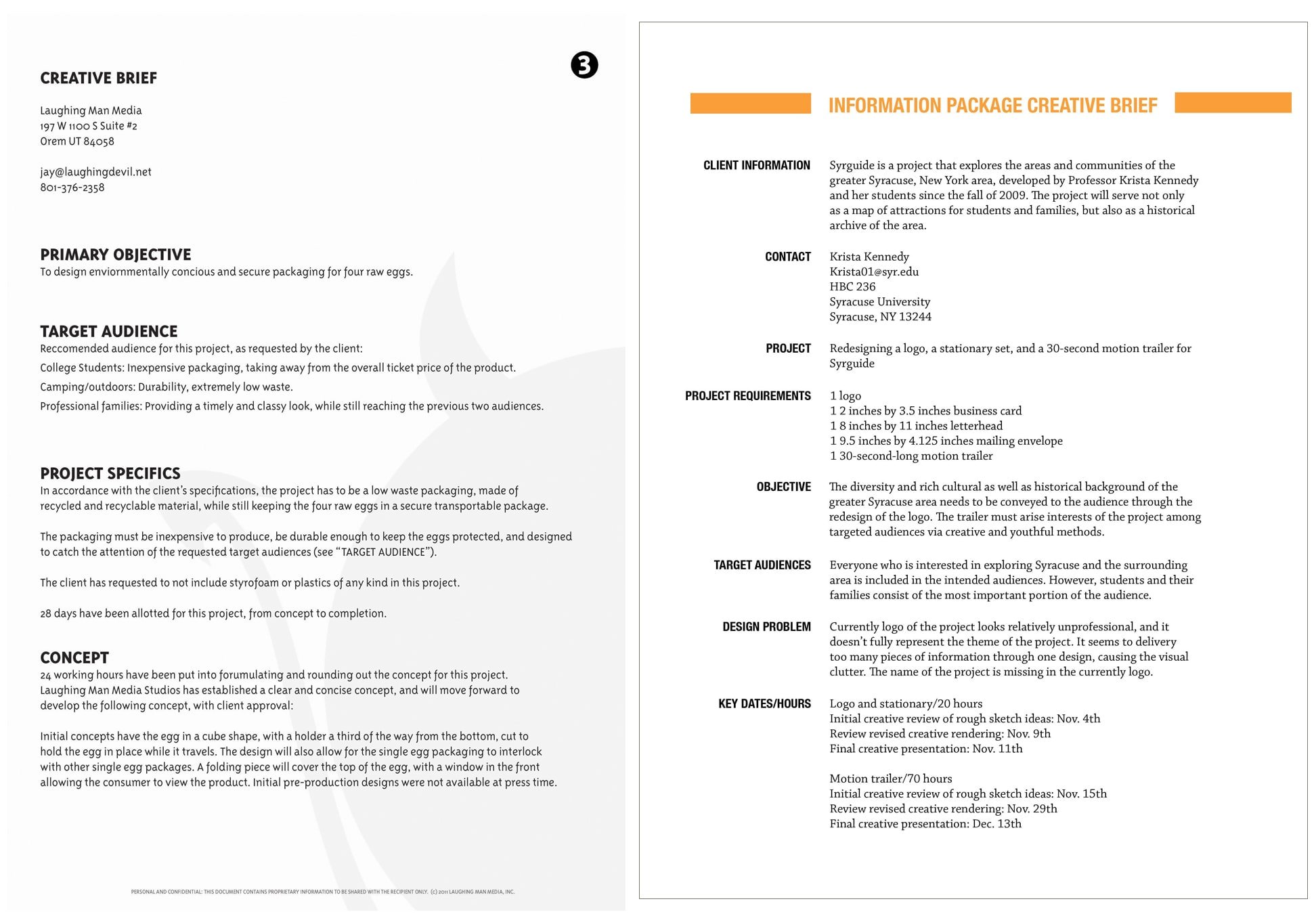
Laughing Man Media brief vs. Krista Kennedy brief
Again, we have too little information gleaned from the first brief from Laughing Man Media. The designer knows the basic project objective but even that’s vague. They know the audience and project concept but have no idea about tone or deadline. Who’s their competition and what are they currently using for marketing?
Now jump over to the brief for Krista Kennedy. It’s clean and concise. It includes the scope of project, contact info, problem to solve, audience, sizes of materials needed and deadlines for all pieces.

Written by
Karen DeFelice